

 Deutsch
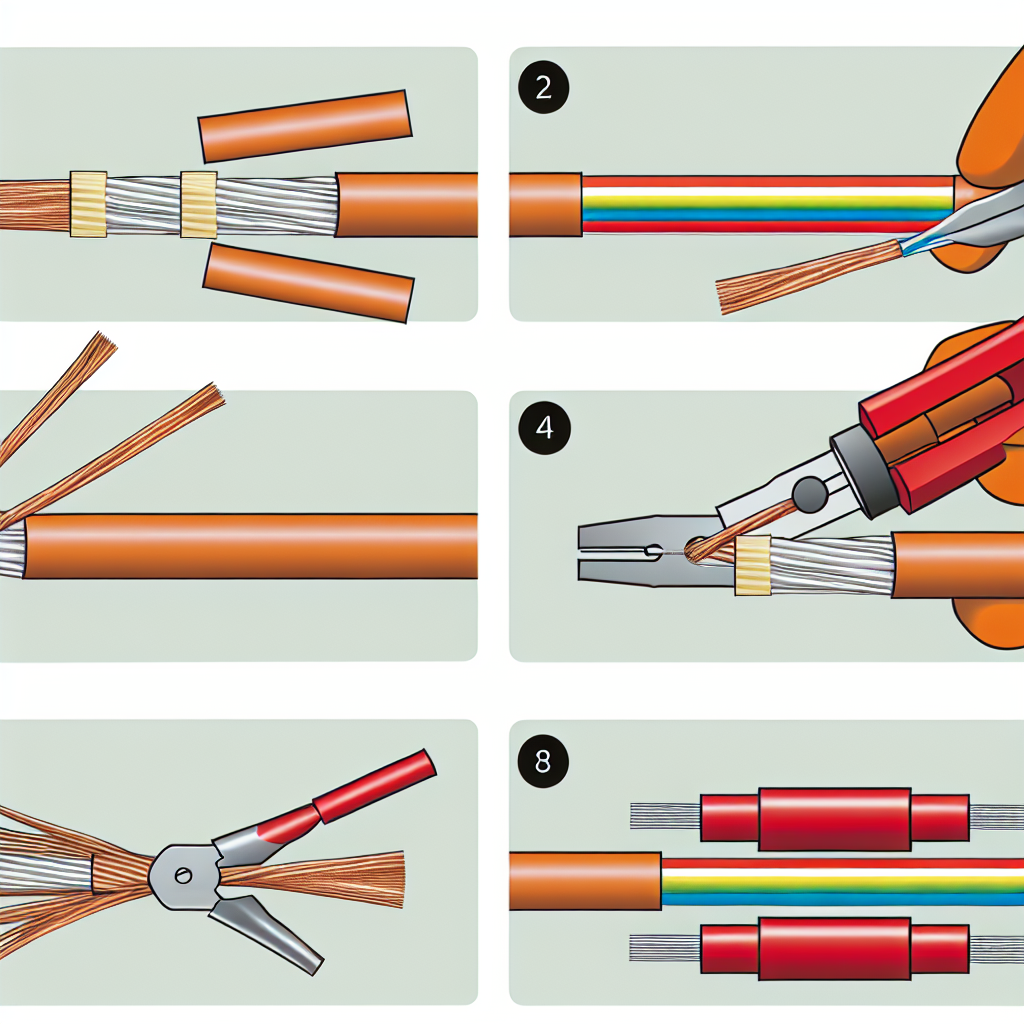
Joining copper cables is an important skill that is needed in many fields such as telecommunications, electronics, and electrical engineering. It allows the connection of two cables to ensure a continuous and stable connection. In this article, we will discuss some tips and techniques for joining copper cables.
Basics of cable splicing with copper
When splicing copper cables, the goal is to connect the two cable ends in such a way that they form a stable and durable connection. This can be achieved through various methods, including soldering, crimping, and twisting. The choice of the appropriate method depends on factors such as cable type, mechanical stress, and the tools used. For a reliable signal and power supply, such work is often carried out as part of professional installations. Networking and electrical engineering performed in accordance with the norm.
To successfully solder copper cables, you need a range of tools and materials. These include a wire cutter, an stripping pliers, a soldering iron, solder, a crimping pliers, and crimp tubing. It is important that you have the right tools and materials for the job to ensure that the connection is safe and stable.
Tips and techniques for splicing copper cables
There are a number of tips and techniques that you should consider when splicing copper cables to ensure a stable and durable connection.
- Preparation of the cables: Before you begin splicing, you should carefully prepare the cable ends. This involves stripping the cable ends and cleaning the copper wires to ensure they are free from dirt and oxidation.
- Twisting the wires: A common method for splicing copper cables is twisting the wires. In this process, the wires of the two cable ends are twisted together to create a mechanical connection.
- Bonding the connection: After twisting the wires, the connection can be soldered to create a stronger and more stable connection. In this process, solder is applied to the twisted wires and heated with a soldering iron until the solder melts and the connection is sealed.
- Isolation of the connection: After soldering, the connection should be insulated to protect it from environmental influences. This can be achieved by applying a shrink tube or insulating tape.
Important considerations when soldering copper cables
When splicing copper cables, there are several important considerations that you should keep in mind. First, it is important to ensure that the cable ends are clean and free of oxidation, as this can compromise the quality of the connection. Second, you should always ensure that the connection is well insulated to protect it from environmental influences and short circuits. Proper connection forms the foundation for fail-safe wiring networks, such as those used for demanding applications in industrial environments. Security technology are indispensable in buildings.
Copper splicing cable: A final look at stable connections
In summary, splicing copper cables is an important skill that is needed in many areas. With the right tools, materials, and techniques, you can create a stable and durable connection between two cables. Remember to carefully prepare the cable ends, twist the wires, solder the connection, and insulate well to ensure the best possible connection.
What methods are there for splicing copper cables?
Common methods include twisting, soldering, and crimping. The choice depends on factors such as cable type, desired stability, and available tools.
What tools are needed for splicing?
Among other things, wire cutters, stripping pliers, soldering iron, solder, crimping pliers and shrink tubing are needed.
What should I consider when choosing the splicing method?
The decision depends on the application, the environmental conditions and the available resources. Proper execution is crucial for a long-lasting connection.

Contributions from the practical experience of our installers, project managers and software developers. The group is led by founder Peter Gräf, a DGuSV-certified expert in security technology.
Our team




 German
 English