

 Deutsch
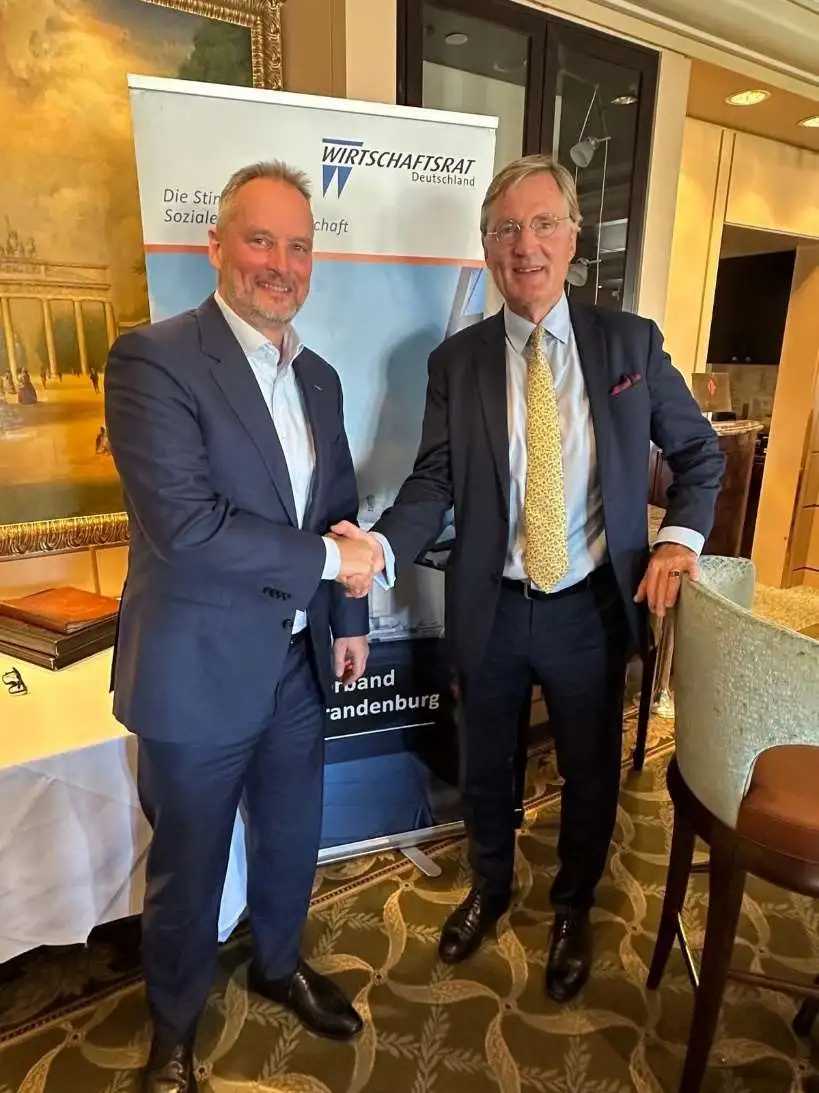
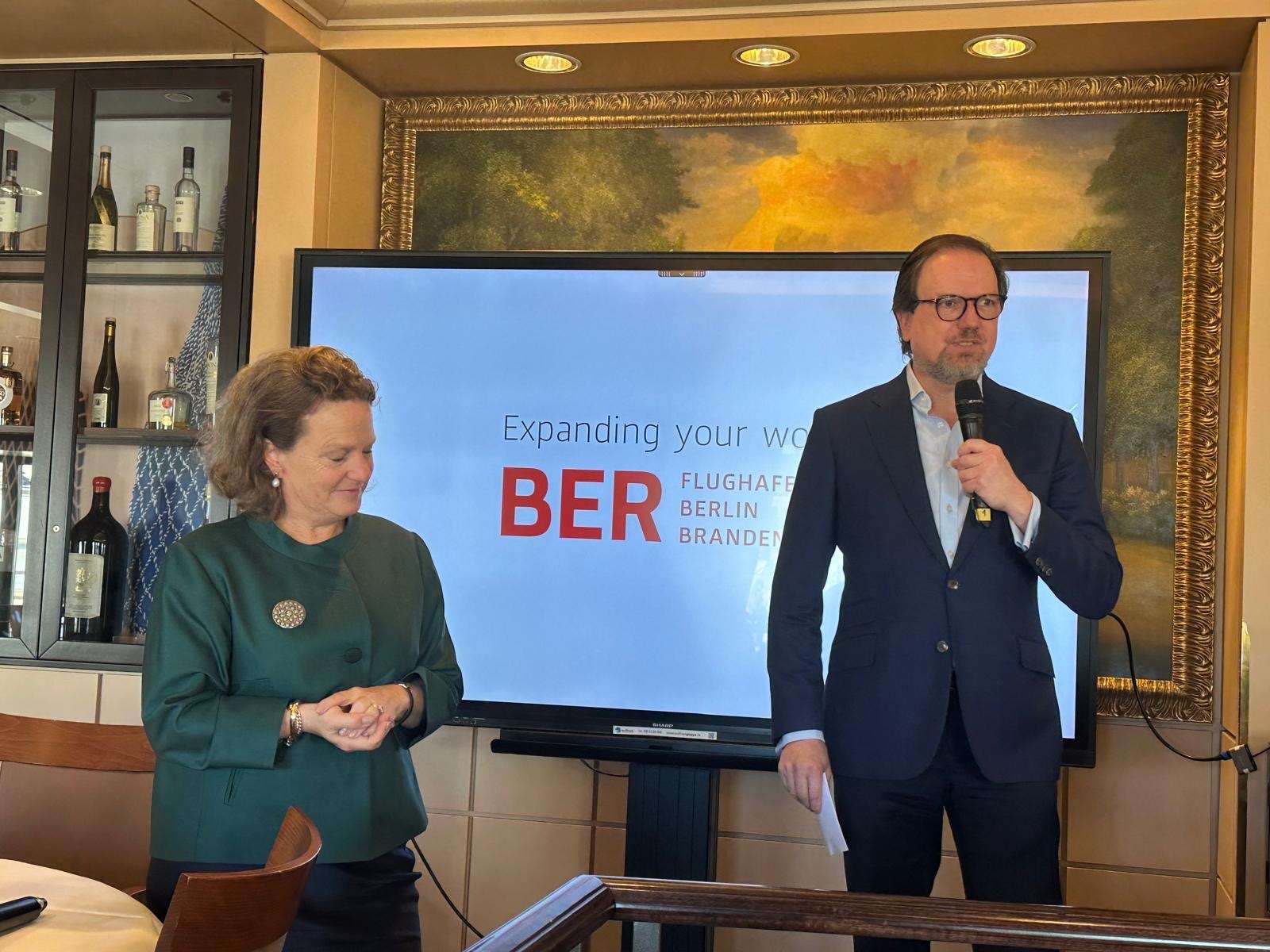
Without defense capabilities, there are no free trade routes, no foreign policy weight, and no permanently secured prosperity. This principle was at the heart of the economic policy breakfast held by the Berlin-Brandenburg branch of the CDU Economic Council at the Gendarmenmarkt in the Berlin Capital Club. Dr. Michael Schoellhorn, Chief Executive Officer of Airbus Defence and Space and President of the Federal Association of the German Aerospace Industry (BDLI), was the guest of honor for the morning. Peter Gräf, founder and CEO of the GRAEF Group, was present as a member of the Economic Council and shared ideas with leaders from business and politics about Europe’s security future.
„Freedom must be able to be defended“: The strategic framework
Dr. Nikolaus Breuel, Chairman of the Berlin-Brandenburg Regional Association, opened the morning with a historical overview: After reunification, the Federal Armed Forces were forgotten; the so-called Peace Dividend had forgotten that land, values, and freedom must be defended militarily. The Russian invasion war against Ukraine, the changed strategic stance of the USA, and other global hotbeds of crises give this reminder new urgency today.
The NATO commitment of investing five percent of gross domestic product in defense and security-related tasks by 2035, as well as the approximately 108 billion euros that Germany alone will allocate in defense budget and special funds for the Bundeswehr in 2026, underline the paradigm shift. However, what is crucial is not who spends the most money, Breuel said, but who implements the massive investments based on a well-thought-out strategy with the necessary speed into actually available capabilities – including artificial intelligence and unmanned systems. For Peter Gräf, who as an entrepreneur experiences daily how closely physical security infrastructure and the resilience of organizations are intertwined, this was a familiar argument: Security begins with planning, not with reaction. The GRAEF Group protects security-relevant properties such as Embassies and diplomatic institutions all over Germany with professional systems that are built on this very principle.
Dr. Michael Schoellhorn: Sovereignty, speed and the will to make a big impact
Dr. Michael Schoellhorn, at the helm of Airbus Defence and Space since July 2021, brought impressive figures: In the 2025 financial year, the division increased revenue by eleven percent to 13.4 billion euros; order intake amounted to 17.7 billion euros, and the order backlog grew to around 50.8 billion euros. After a year marked by challenges, the return to the black figures was achieved – the adjusted operating result rose from minus 566 million to plus 798 million euros. Behind these figures are around 36,000 employees, and what Schoellhorn described as the core of European sovereignty: the ability to develop, produce, and deploy one’s own defense and space technologies.
His central plea: „We need sovereignty“ – especially in satellite-based communications, spaceflight and unmanned systems. Europe must learn to think big and scale up, and must not let bureaucracy paralyze it. For this, industry needs above all reliability: continuous, cross-period funding is the prerequisite for manufacturers to plan and produce with sufficient lead time. This principle is familiar to Peter Gräf from his own practice: Security service providers can only protect sustainably if systems are not installed reactively, but are planned strategically and maintained long-term – from the very beginning. Burglar alarm systems up to fully documented safety plans.
- NATO goal: 5% of GDP for defense and security by 2035
- Germany 2026: around 108 billion euros from the defense budget and special assets
- Airbus Defence and Space 2025: Revenue €13.4 billion (+11%), Order backlog €50.8 billion
- Adjusted operating result: improved from −566 million to +798 million euros
- Airbus as anchor investor in the European E2D growth fund for defense and dual-use technologies
Spaceflight, FCAS and the bridge between industry and security technology
Schoellhorn placed particular emphasis on the role of space: „Without sovereignty in space, we are blind and deaf on the ground.“ Europe needs its own, flexible launch capabilities, more carrier rockets, and a consolidated space industry. At the Airbus head of the German-French FCAS fighter jet project, the Airbus chief was pragmatic: The program will continue, but individual parts will need to be restructured. Perfection is not the goal; speed and iteration must be the measure of success in the future. He cited the networking of Eurofighters with drones in the system integration as a concrete example of modern air defense, which complements, but does not replace, human judgment autonomy.
To accelerate the technology transfer between established industry and agile young talent, Airbus has joined the European E2D Growth Fund as an anchor investor – with the aim of retaining capital, talent, and intellectual property in Europe. The intensive questioning by the business council members tapped into this idea: It is not the big integrators alone, but the entire ecosystem of suppliers, research institutions, and start-ups that decide whether Europe can close its skill gaps. Peter Gräf brought a conviction from this event that he lives in his daily work at the GRAEF Group: Security – whether digital or physical – is not a one-time task, but a continuous process. The GRAEF Group has been supporting companies and authorities since 2007 from First consultation from planning and installation to long-term maintenance of their security systems – nationwide and from a single source.
Security begins with proper planning
Physical security systems – access control, video surveillance and intrusion detection – protect the rooms where critical decisions are made, data is processed and security-relevant technology is operated. The GRAEF Group plans, installs and maintains these systems with clear documentation and long-term support.
What role did Peter Gräf play at the event?
Peter Gräf, founder and CEO of the GRAEF Group, participated in the event as a member of the Berlin-Brandenburg Economic Council and followed Dr. Schoellhorn’s impulses in the dialogue between business and politics.
Why is physical security infrastructure part of the defense architecture?
Cyberattacks and hybrid threats also exploit physical vulnerabilities – unauthorized access to server rooms, communication hubs, or security-sensitive properties can bypass the entire protection mechanism. Professional intrusion detection systems, access control systems, and video surveillance reliably close these gaps.
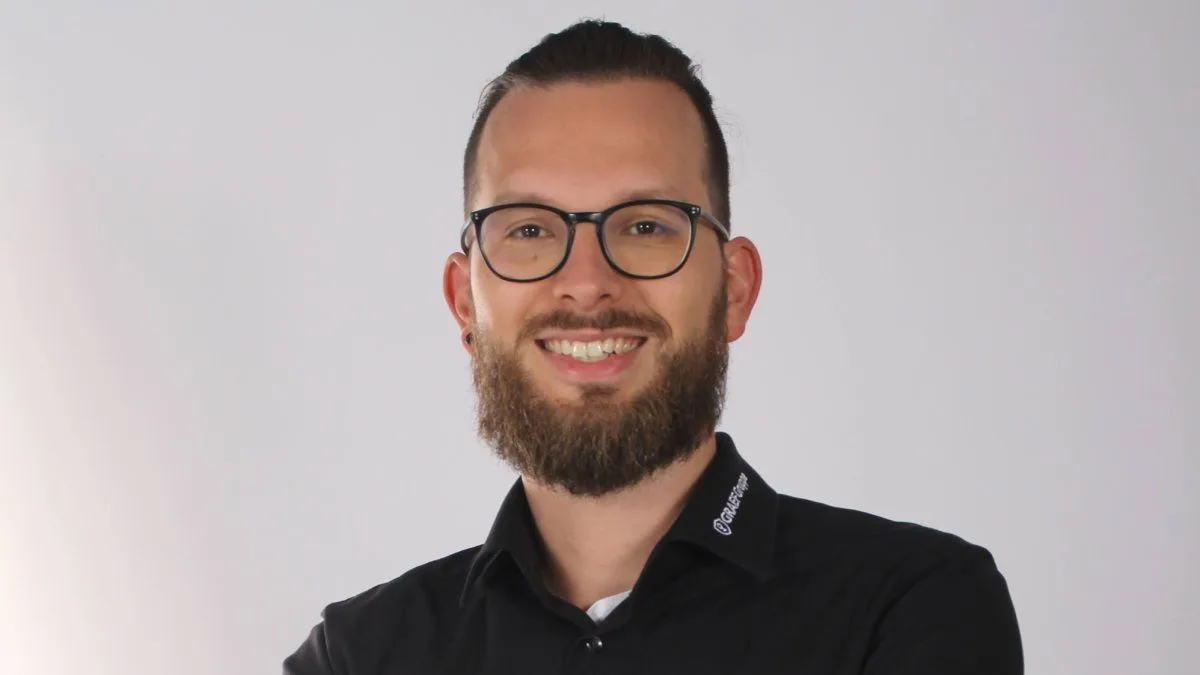
Contributions from the practical experience of our installers, project managers and software developers. The group is led by founder Peter Gräf, a DGuSV-certified expert in security technology.
Our team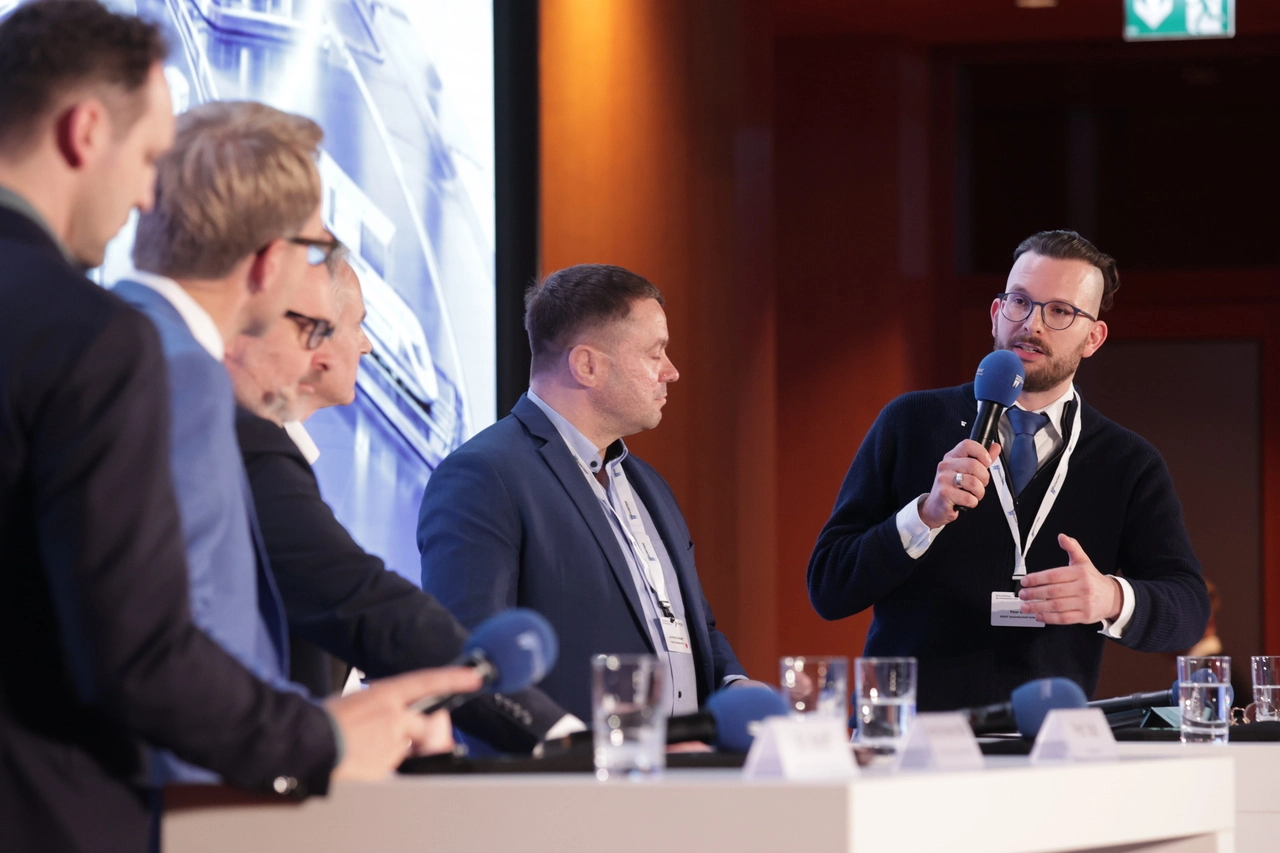

 German
 English