
 German
 English
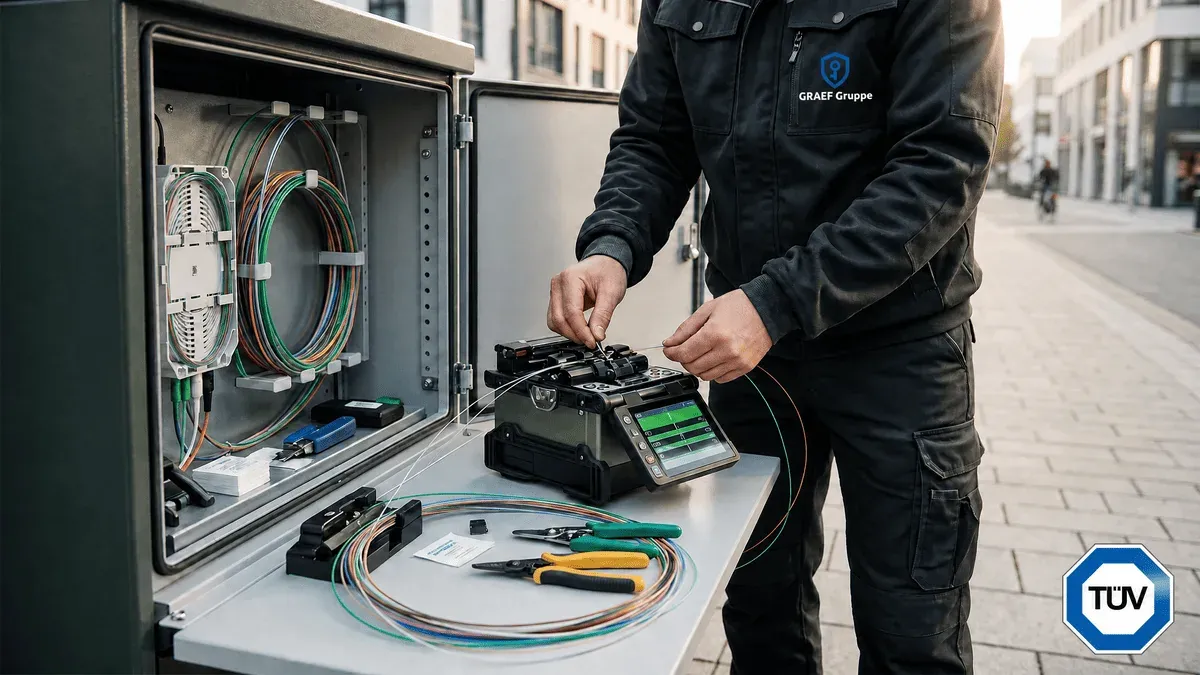
LWL cables splicing and installation in Berlin & Brandenburg
Fiber optic technology is powerful and excellent in the fields of information technology and security technology. A fiber optic cable – „LWL“ stands for light waveguide – enables the transport of data extremely quickly and without interruption. Fiber optic technology is unrivaled in this regard. However, installing a fiber optic cable is not at all easy. Special procedures and a great deal of dexterity are required for this. The GRAEF Group offers both: We are your specialist service provider in Berlin and Brandenburg for the installation of fiber optic cables without any attenuation.
Installing LWL cables: The service of a professional
Do you need assistance in installing an optical fiber cable? Then you can rely on the services of the GRAEF Group! We are your expert partner for all matters related to high-quality fiber optic technology and a specialist in splicing cables. Our area of operation extends across all of Berlin and Brandenburg. Our highly trained technicians are happy to assist you. Simply contact us: We will professionally install the desired fiber optic cables, working quickly and to your complete satisfaction.
Installing LWL cables: Why is splicing necessary?
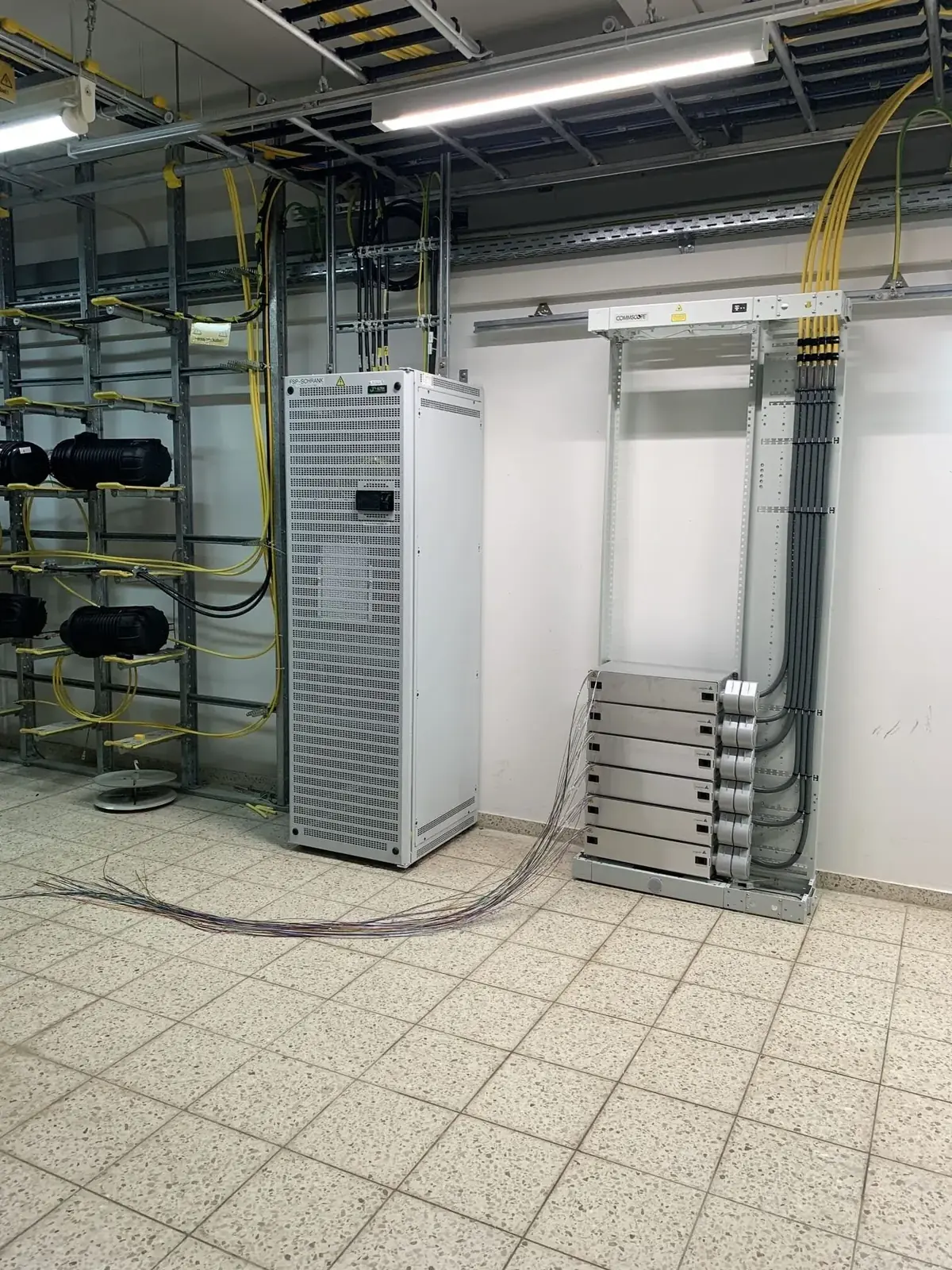
There are no continuous fiber optic lines – in long stretches they are always laid in pieces. In this case, we connect the ends with so-called mufflers. These are protective plastic capsules that protect the sensitive fiber optic ends from moisture and dust. However, mufflers alone are not enough to ensure that the light waves travel from the starting point through each section of the fiber optic cable to their destination. The mufflers must still be connected to each other. Only then is light wave transmission possible. This is done using a special welding technique known as splicing by the skilled technician – a much more complex process than, for example, a simple soldering or pressing connection for a copper cable.
Fiberglass splicing: How does splicing work?
Splicing is the most precise and stable method for connecting fiber-optic cables without any attenuation. The highest precision is required during splicing. Fiber optic cables are actually made of fragile glass and must be handled with great care. That is why we use specialized tools such as diamond cutters and fusion splicer stations to process and connect cable sections. The splicing process is as follows: Two fiber optic cable sections are carefully placed in a splicer machine with one end each. The device generates an arc of light that heats the contact points of the two cable sections and fuses them together firmly. The cable ends must be aligned very precisely for this. Please note: A fiber optic cable is approximately three to ten times thinner than a human hair with a core diameter of about nine micrometers.
LWL wire splicing: Book our professional service now!
The GRAEF Group is your contact partner for fiber optic technology in Berlin and Brandenburg. We reliably and quickly splice and install fiber optic cables. Simply call us at the phone number +493069202294 or use our contact form. We will then promptly take care of your project. The team of the GRAEF Group looks forward to your inquiry!




 German
 English