

 Deutsch
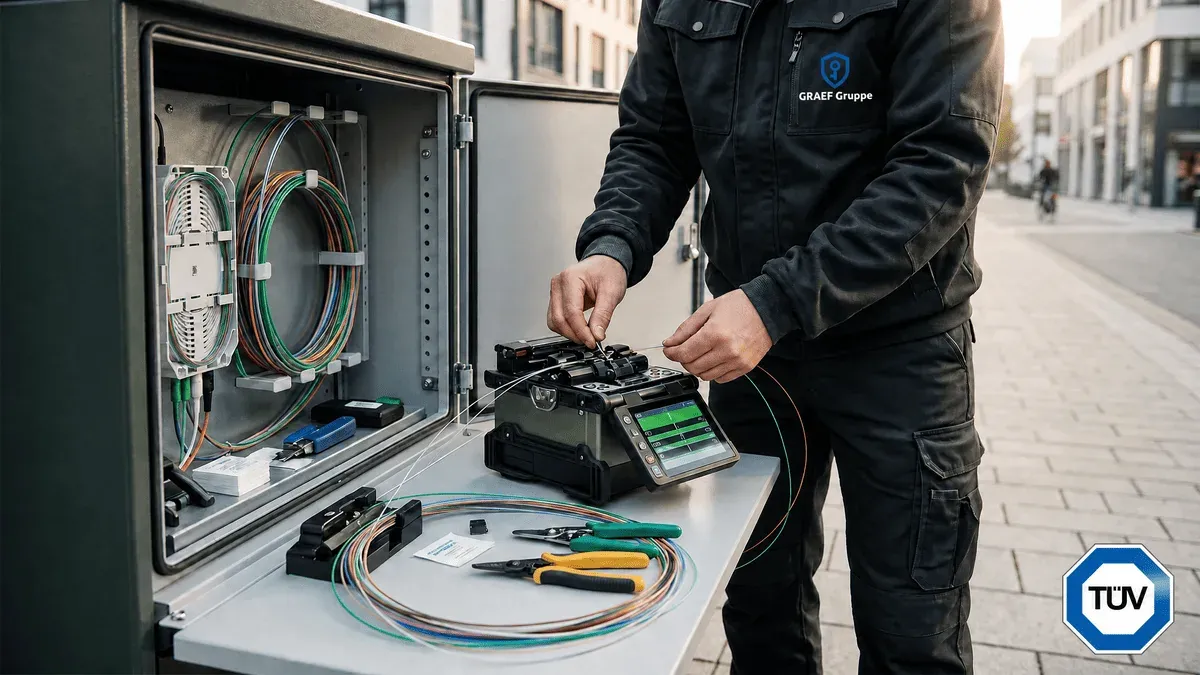
The GRAEF Group offers professional fiber optic cabling and precise splicing of fiber optic cables for industrial and public infrastructure. We connect your fiber optic lines according to standard specifications, measure the attenuation using OTDR, and ensure seamless data transmission for data centers, network operators, and critical facilities.
LWL infrastructure and fiber optic splicing work according to ZTV-TKNetz 48
The planning, installation, and maintenance of fiber optic networks require the highest precision, especially when high data rates and fault tolerance must be guaranteed. As a specialist service provider of the GRAEF Group, we carry out fiber optic cabling and splicing work not only according to general standards, but specifically according to the ZTV-TKNetz 48 standard. This guideline is the benchmark for the technical implementation of fiber optic networks in the public and private sectors.
Our team has the necessary expertise to seamlessly connect fiber optic cables and to optimally utilize the physical properties of the optical waveguides. State-of-the-art fusion splicers are used to ensure virtually no attenuation during the connection of the fiber optic cables. Accuracy is crucial, as the core diameter of a fiber optic cable is only about nine micrometers – about three to ten times thinner than a human hair. Even the smallest inaccuracies in alignment can lead to significant signal loss.
We offer you a complete service from a single source: from free Initial consultation from planning to assembly and maintenance. A dedicated project manager coordinates all work, so you as the client have only one contact person. This ensures efficient execution and prevents communication gaps on the construction site.
OTDR measurement and documentation for maximum transparency
After splicing the fiber optic cables, precise measurement is essential to confirm the quality of the connection. We perform an OTDR measurement (Optical Time Domain Reflectometry) for each splicing result. This method sends light pulses into the cable and measures the reflections to precisely locate any weak points, bending losses, or splicing errors.
The results of the OTDR measurement are documented in full detail and provided to you with a complete measurement protocol. This creates confidence and traceability for the data transmission performance. Whether for a local network, a data center, or the expansion of FTTH infrastructures (Fiber to the Home/Hub), our documentation meets the highest technical standards. By combining compliant splicing with precise OTDR measurement, we ensure that your fiber optic infrastructure remains stable and efficient in the long term.
Repair and maintenance of damaged fiber optic cables
Fiber optic cables are robust, but can be damaged by mechanical stress or external influences. Interruptions or increases in attenuation in the cable can affect the entire data transmission. Our technicians specialize in repairing damaged fiber optic cables. We locate the fault location, open the sleeve or cable, perform the necessary splicing process, and seal the connection again to ensure weather and dust resistance.
An outstanding example of our expertise in this area is the reference project at the Mercedes-Benz Arena. The LWL infrastructure was professionally installed and maintained as needed. The precise work of our technicians ensures that no data loss occurs even with complex projects with high availability requirements. We respond quickly and reliably to keep downtime in your network as low as possible.
References: Deutsche Telekom and critical infrastructure
The GRAEF Group has established itself as a reliable partner for fiber optic infrastructure through numerous successful projects. Our References These include work for Deutsche Telekom, where we have built the LWL infrastructure for the expansion and extension of fiber optic networks. The requirements for data transmission rates and network stability are particularly high here, which underscores our expertise.
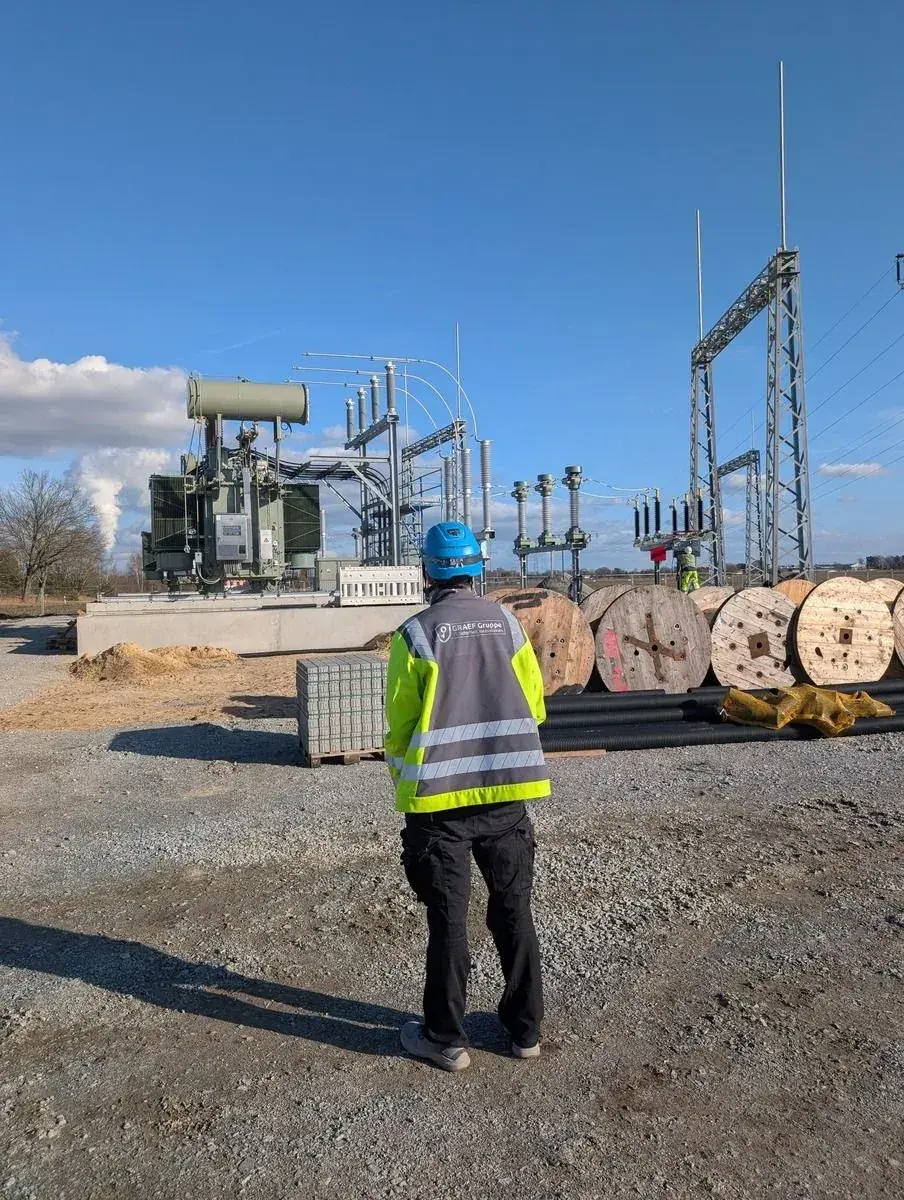
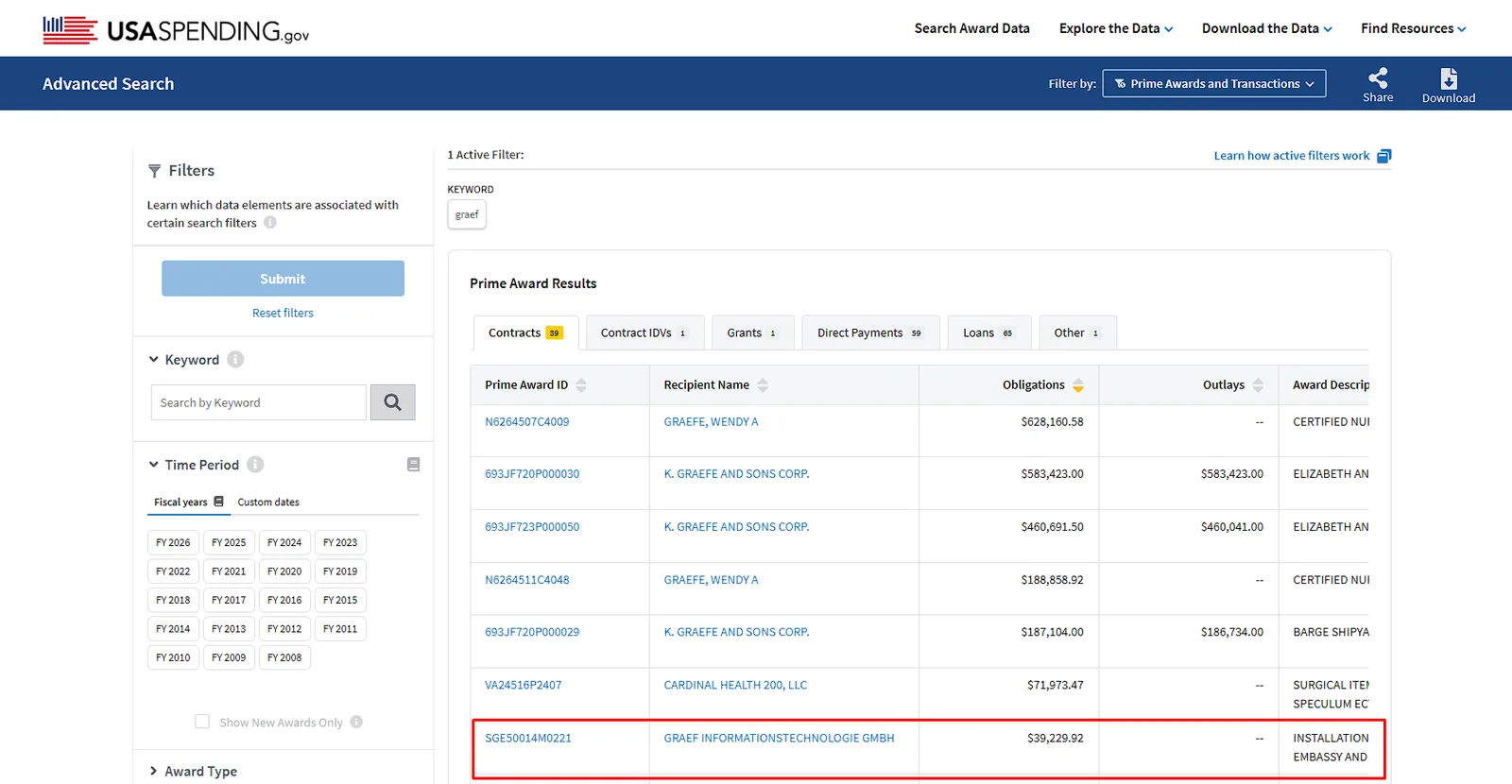
In addition to the telecommunications sector, we are also active in other critical infrastructure sectors. For example, we have implemented fiber optic solutions for railway companies at stations and depots, as well as for the Bluno substation in Hoyerswerda. Our services have also been used for embassies and the Federal Police, as well as the Bundeswehr. These diverse areas of application show that our technicians are familiar with a wide range of requirements for fiber optic cabling and splicing work.
Why the GRAEF Group is investing in fiber optic splicing?
Choosing a specialized provider for fiber optic splicing offers several advantages. First, you save on the procurement and maintenance of expensive measurement equipment, such as OTDR devices and fusion splicer machines, which are necessary for professional results. Second, you benefit from the experience of our technicians, who are familiar with the latest technologies and standards.
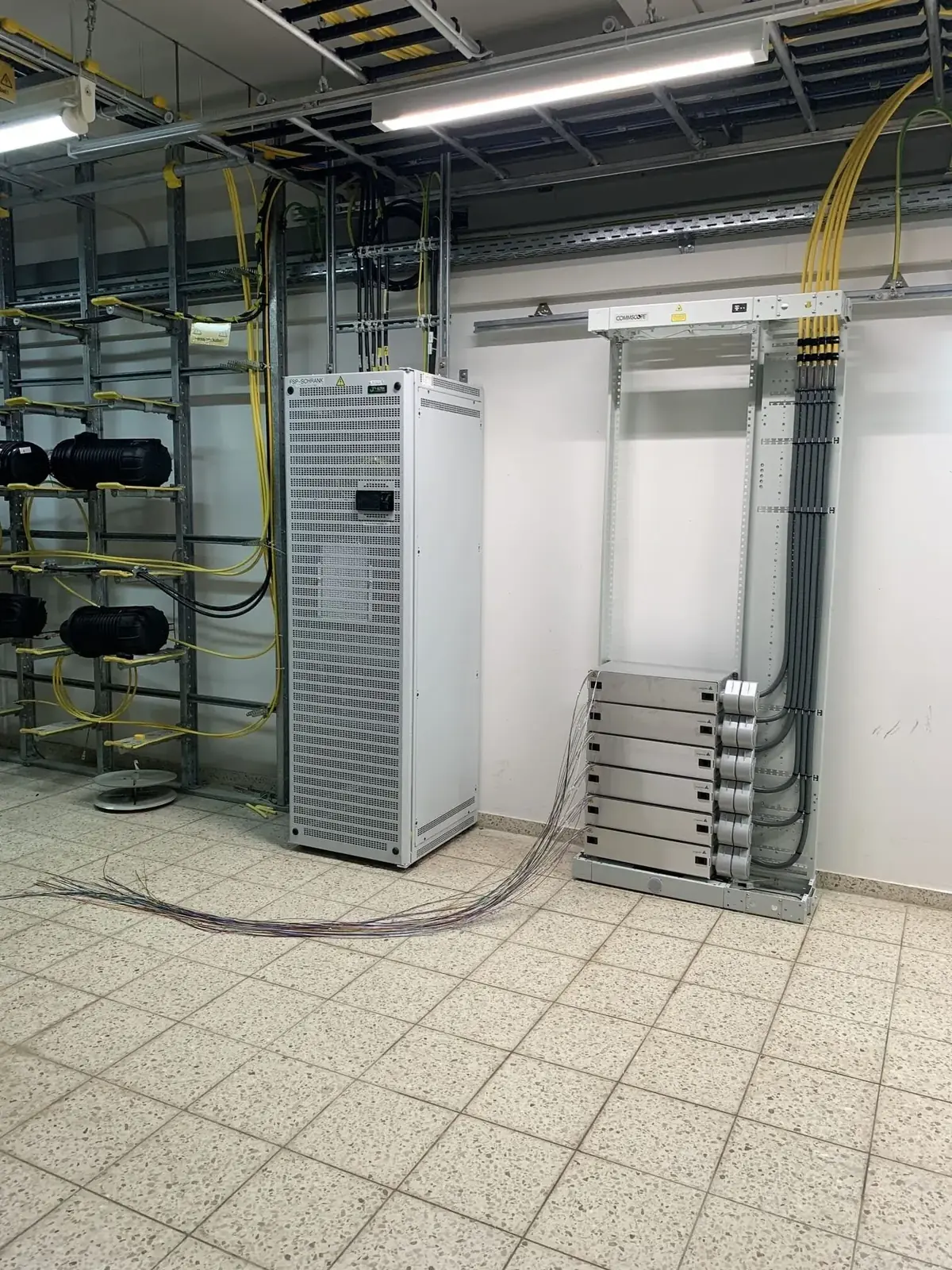
Our services not only include the simple splicing, but also the complete installation of fiber optic cables according to ZTV-TKNetz 48. We ensure the correct installation, splicing at the end points and in the muffles, as well as the final measurement and documentation. The muffles protect the sensitive fiber optic ends from moisture and dust, but only the precise splicing within these muffles ensures the optical connection. We use high-quality materials and processes to ensure a long lifespan of the connection.
As a consortium of nine companies for Security technology, With IT and fiber optic technology, we offer synergies that a pure cable contractor cannot provide. We understand the connections between the physical infrastructure and the IT data that runs on it. This is particularly relevant when fiber optic cables need to be integrated into existing security systems or data centers.
Frequently asked questions
What is the difference between mechanical fusion and fusion splicing?
In mechanical splicing, the ends of the glass fibers are mechanically aligned and provided with a glue or gel filler to enable light transmission. The fusion splicing we primarily use fuses the ends of the glass fibers together into a single piece through an electric arc. This results in significantly lower attenuation and higher stability of the connection, which is preferred for high-quality fiber optic infrastructure.
Why is an OTDR measurement important after splicing?
An OTDR measurement (Optical Time Domain Reflectometry) creates a curve of attenuation over the entire length of the fiber optic cable. It accurately shows where the splice points are and how high the loss is. This way, we can ensure that each individual connection meets the required limits and that the entire cable network provides the required bandwidth for data transmission.
Are you also watching ZTV-TKNetz 48?
Yes, we explicitly perform fiber-optic deployment and splicing work in accordance with the ZTV-TKNetz 48 standard. This guideline defines the technical requirements for fiber optic networks in the public and private sectors. Compliance with this standard is often a prerequisite for approval by network operators or large industrial companies.
What materials and tools do you use when splicing?
We use professional fusion splicer machines that allow precise alignment of the fibers, as well as high-quality mufflers and protective capsules. To prepare the glass fibers, we use diamond cutters and precise stripping devices. This ensures that the sensitive glass fibers are not damaged and that the splicing losses are minimized.
How long does a splicing project take?
The duration depends on the number of splicing points, the type of installation (e.g., in a cable duct, in the air, or in the ground), and the access conditions on site. After a free initial consultation, which we also conduct on-site, we will prepare a binding offer with a realistic estimate of the time required for your project.
Request a free initial consultation for your fiber optic project now
Are you planning to expand or repair your fiber optic infrastructure? Contact us for a non-binding consultation and an individual quote. We can be reached at the telephone number +49 30 69202294 We are available to you and will promptly address your request.
 German
 English