

 Deutsch
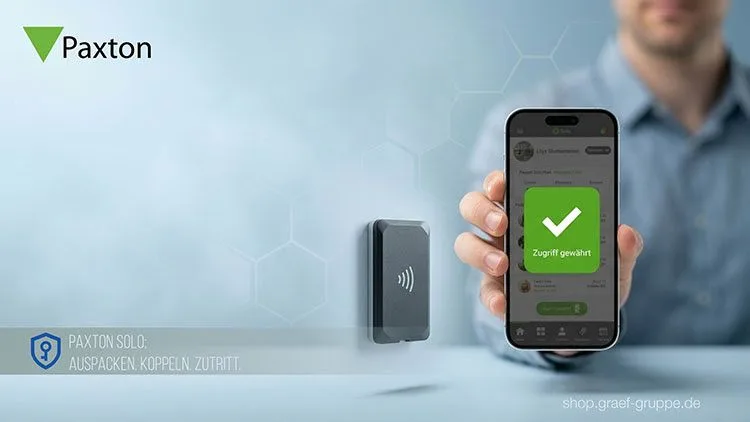
With Paxton Solo A new access control solution is now available that is deliberately designed to be low-complexity and quick to set up. Instead of local servers, administrative PCs, and additional network infrastructure, the system relies on a Phone-based and cloud-hosted approach. This is particularly interesting for smaller objects, retrofits, or distributed locations, because classic access control solutions often require more effort than is actually necessary there.
For many operators, this is exactly the challenge: doors need to be managed securely, user access needs to be easily configured, and access rights need to be flexibly adjusted without requiring extensive IT infrastructure on-site. Paxton Solo therefore takes a different approach. Management is done via a Central app, This is organized both in terms of the facility and its daily use. This way, access control is more closely adapted to the real requirements of modern buildings.
For the GRAEF Group This solution is particularly relevant because Paxton Solo offers a practical answer to projects where simple scalability, low entry barriers, and economic implementation are key considerations.
Why classic systems encounter limitations in many projects
Classical access control systems are powerful in many applications, but often involve higher technical and organizational costs, especially in smaller or decentralized projects. Local servers, administrative computers, network connectivity, and ongoing maintenance not only increase complexity but also operational costs.
Less infrastructure, less ongoing effort
Paxton Solo deliberately abstains from On-site servers and on one local administrative PC. This reduces the technical hurdles already in the planning phase. Furthermore, no local data network required, This makes the system interesting for locations where only individual doors need to be managed or where no comprehensive IT connection is required.
Quick setup and flexible management
Another advantage is the Quick setup directly via the app. User permissions, access rights, and schedules can be customized without requiring complex on-site configuration. This is especially useful where requirements change quickly or where locations are not permanently technically managed.
What functions does Paxton Solo offer in everyday use?
Paxton Solo was designed for simple and secure operation. The focus is on keeping access processes lean and still allowing for a good overview of users and activities.
Access control via smartphone
The door control is done via the Smartphone, This reduces the need for physical keys or complex card management in many scenarios. This makes organization easier, especially when users need to be added, removed, or temporarily enabled quickly.
Central overview of activities and access
The app makes it clear which access has been granted and what activities are taking place in the system. This transparency is important in practice because operators not only grant permissions, but also want to control and document processes.
Secure communication through modern cloud architecture
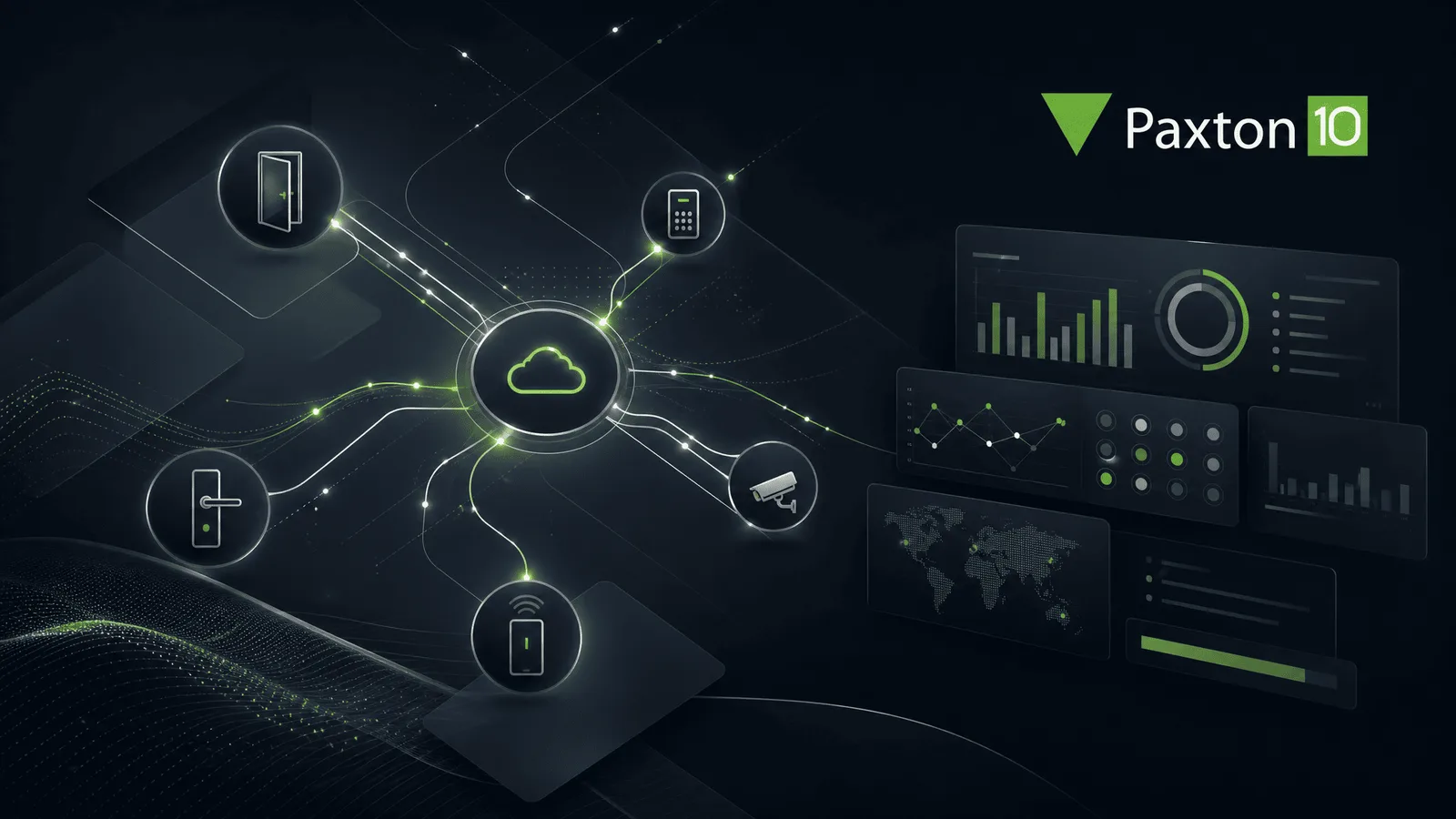
Paxton Solo relies on one Modern cloud architecture, To ensure reliable and secure communication. For users, this means a modern technical foundation where security features and system updates are integrated into the platform.
Efficient usage model without high initial investment
In addition to the technical structure, the operating model is also interesting. Paxton Solo does not use traditional software licenses and does not rely on local server infrastructure. Instead, the system is based on a Flexible credit model, where doors and users are activated as needed.
Predictable costs and flexible expansion
This brings several practical advantages:
- no server costs on-site
- no high one-time investments for local infrastructure
- predictable operating costs with high transparency
- Extensions as needed, Without the need for an on-site technician to be present
This model is particularly interesting for operators who need to plan economically. Projects can be implemented in stages without having to build a large technical environment from the outset.
For which fields of application Paxton Solo is particularly suitable
Paxton Solo is particularly suitable for Retrofits, smaller objects and distributed locations. Where classical systems have previously been considered too complex or uneconomical, the solution opens up new possibilities. This can apply to small commercial premises as well as side buildings, office units, technical rooms or buildings with few controlled doors.
With the approach „Unpack. Connect. Enter.“ It becomes clear that Paxton Solo is geared towards rapid implementation. For the GRAEF Group This is an exciting product because it makes modern access control much more accessible and offers a solution for projects where simplicity, flexibility, and economical operation are key factors.
Products:
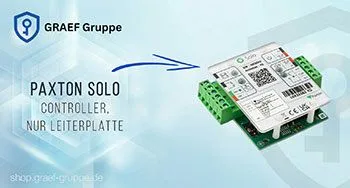
Paxton SOLO Controller – PCB
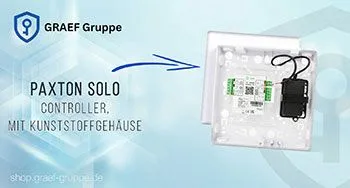
Paxton SOLO Controller – Plastic housing
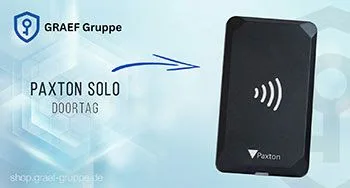
Paxton SOLO DoorTag

Contributions from the practical experience of our installers, project managers and software developers. The group is led by founder Peter Gräf, a DGuSV-certified expert in security technology.
Our team
 German
 English