

 Deutsch
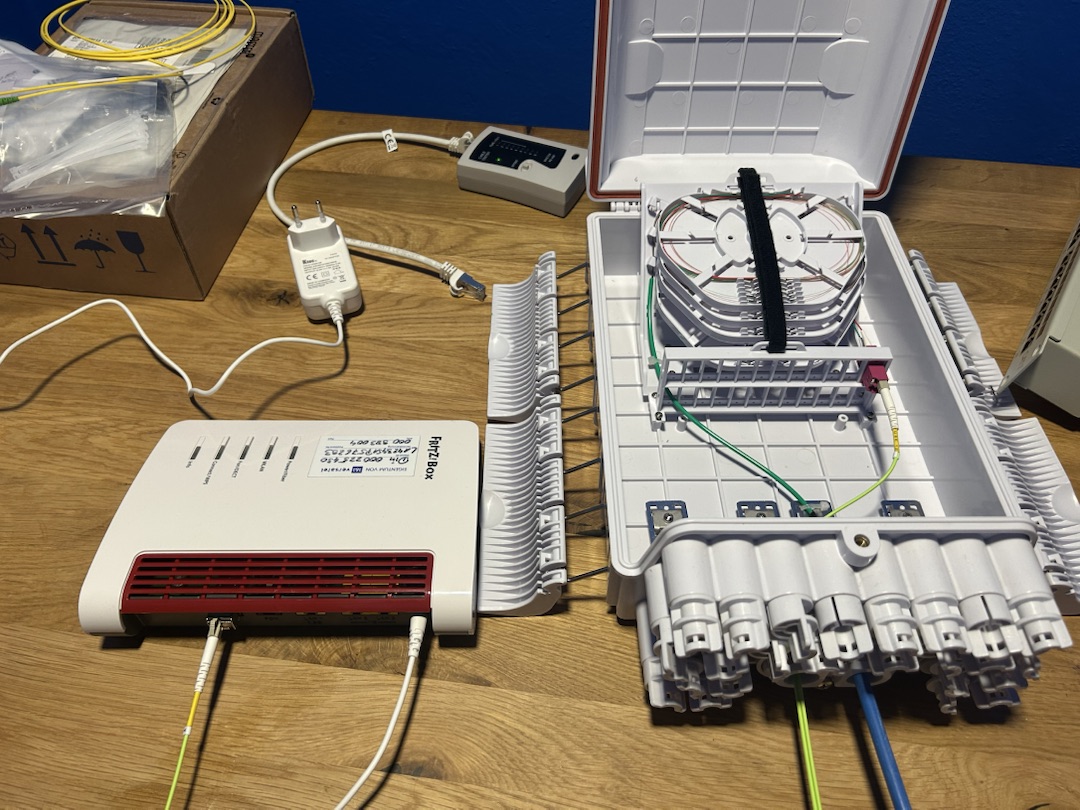
Fiber optic cable to the building – that is the goal of the FTTH concepts (Fiber to the Home). However, there is often more distance between the drop point in the basement or at the property boundary and the actual connection point in the building than the original plan intended. In such cases, a Extension of the home connection Necessary: The fiber optic cable must be routed properly so that the connection can actually be used.
The GRAEF Group has exactly this task for the Telekom Adopted: the extension of FTTH home connections – from the cable installation to the splicing work and the clean handover. Such works require precision, experience in handling optical fiber cables and a structured approach to ensure that the fiber optic connection remains permanently stable and loss-free.
Why home connections need to be extended
In practice, there are various reasons why an FTTH home connection does not end directly at the planned endpoint:
Building structure and management
Older buildings, complex floor plans, or subsequent modifications can make it impossible to implement the originally planned route of installation. In such cases, an alternative route must be found and the line must be extended accordingly.
The delivery point and the place of use are far apart
Often the point of delivery (e.g., home entrance or basement distribution) is located far from the actual place of use – for example, an office on the upper floor or a unit in the other end of the building. A stretch cord bridges this distance cleanly and in accordance with regulations.
Retrofitting
In existing buildings that are subsequently connected to the fiber optic network, an extension is often the only way to lead the connection to the desired end point – without the need for an expensive re-routing of the entire route.
What is technically required for an FTTH extension
Installing a home connection extension is not just a matter of pulling a cable. Fiber optics places special demands on handling, connection technology and quality assurance.
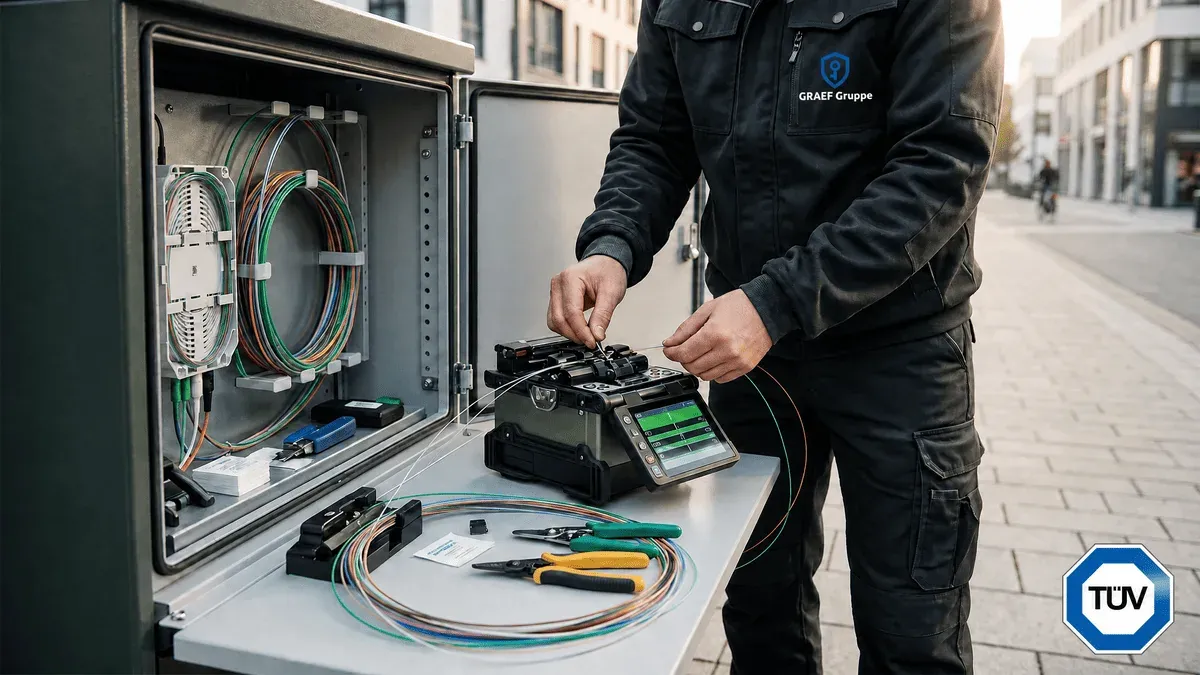
Cable laying and wiring
Depending on the building and situation, different laying methods are used: concealed pipes, cable ducts, concealed installation or exposed installation. A clean, load-bearing and mechanically protected guide for the fiber optic cable is crucial for subsequent maintenance and expansion.
Joint work: connection at the highest level
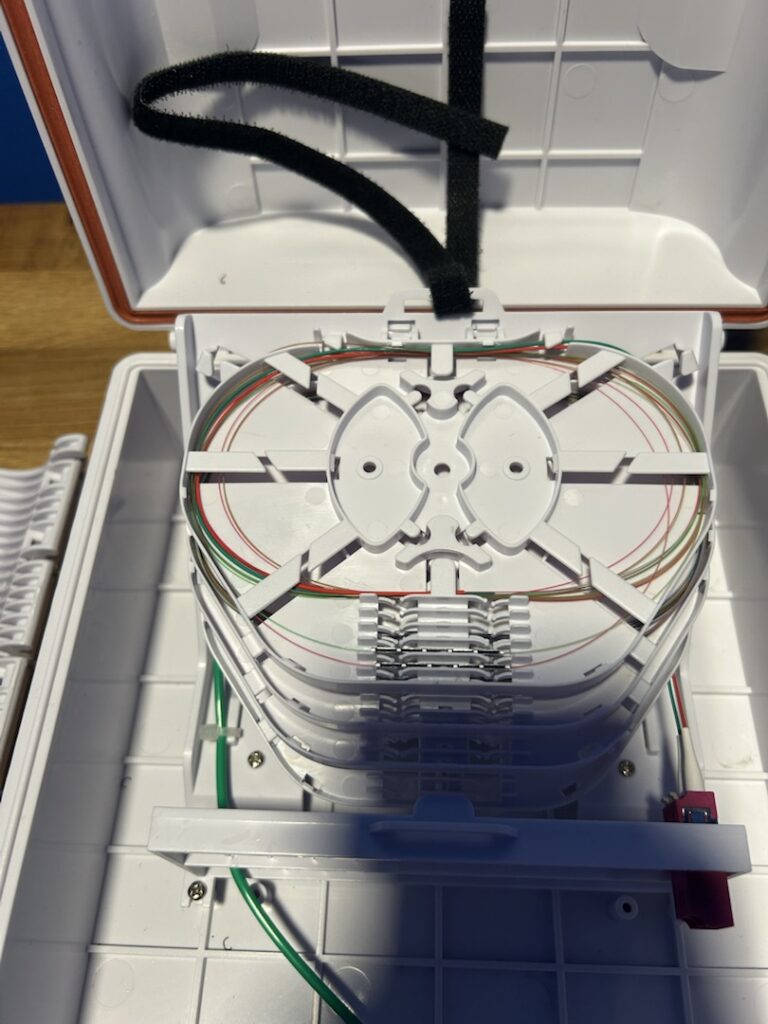
When fiber optic cables need to be connected, Bonding work For use. In welding splicing, the glass fibers are thermally fused together – a technique that ensures minimal attenuation values and long-term stable connections. Each splicing connection is then measured and documented to verify the quality of the joint.
Measurements and quality assurance
After the work is completed, the entire route will be covered with OTDR (Optical Time Domain Reflectometer) measured. This allows attenuation values, reflections, and any errors in the path to be precisely located and documented. Only when the measurement values meet the requirements does the path count as completed.
Requirements from Telekom: Standard-compliant implementation as a basis
Work on telecommunications infrastructure is subject to clear technical specifications. Installation quality, splicing values, documentation, and delivery formats must meet the requirements of the network operator. This requires that contractors are familiar with the applicable standards and processes and work in a structured manner – from planning to execution and the handover of the measurement logs.
Implementation by the GRAEF Group: Experience in fiber optic installation
The GRAEF Group Provides experience in the installation and connection of optical fiber cables – from cable routing in the building to splicing work and the final measurement. Clean, comprehensible execution is the key: every connection is correctly made, every length measured and documented.
For clients like Telekom, this means reliable execution according to specifications, structured handover, and a fiber optic line that operates permanently stable – without the need for subsequent repairs.
Fiber optic as infrastructure: Why quality in installation is crucial
FTTH is an infrastructure designed for decades. Errors in installation or splicing connections can ultimately lead to unstable connections, increased attenuation, or complex troubleshooting. Therefore, careful execution from the outset is not a question of expense but an investment in the longevity of the infrastructure. This is exactly the aspiration that FTTH is designed to achieve. GRAEF Group It implements such projects – precisely, documentedly, and with the goal of delivering a route that will operate reliably in the long term.
How do I know if I have FTTH or FTTB?
This can usually be seen in the hardware: If a fiber optic cabinet (Gf-TA) is installed in your apartment and a fiber optic modem (ONT) is connected directly to the router, it is FTTH. In FTTB, the fiber optic cable ends in the basement in a large cabinet (DSLAM/MSAN), and in the apartment you continue to use a conventional telephone socket (TAE). A look at the contract or a check of availability with the provider will also provide information.
What is FTTH at Telekom?
FTTH stands for „Fiber to the Home“. With this connection from Telekom, the fiber optic cable is not only routed to the grey box at the roadside or into the basement, but directly to the apartment or the single-family home. This enables extremely stable and high bandwidths of up to 1,000 Mbit/s (1 Gbit/s) and more, as no power-limiting copper cables are used in the „last mile“.
Which is better, FTTH or FTTB?
FTTH is the technically better and more future-proof solution. While with FTTB („Fiber to the Building“), the fiber optic cable ends in the basement and the data is distributed within the house via existing copper lines (VDSL/G.fast), this bottleneck is completely eliminated with FTTH. FTTH provides continuous fiber-optic cables to the router, which guarantees higher speeds, lower latency times, and reduced susceptibility to interference.
Contributions from the practical experience of our installers, project managers and software developers. The group is led by founder Peter Gräf, a DGuSV-certified expert in security technology.
Our team

 German
 English