

 Deutsch
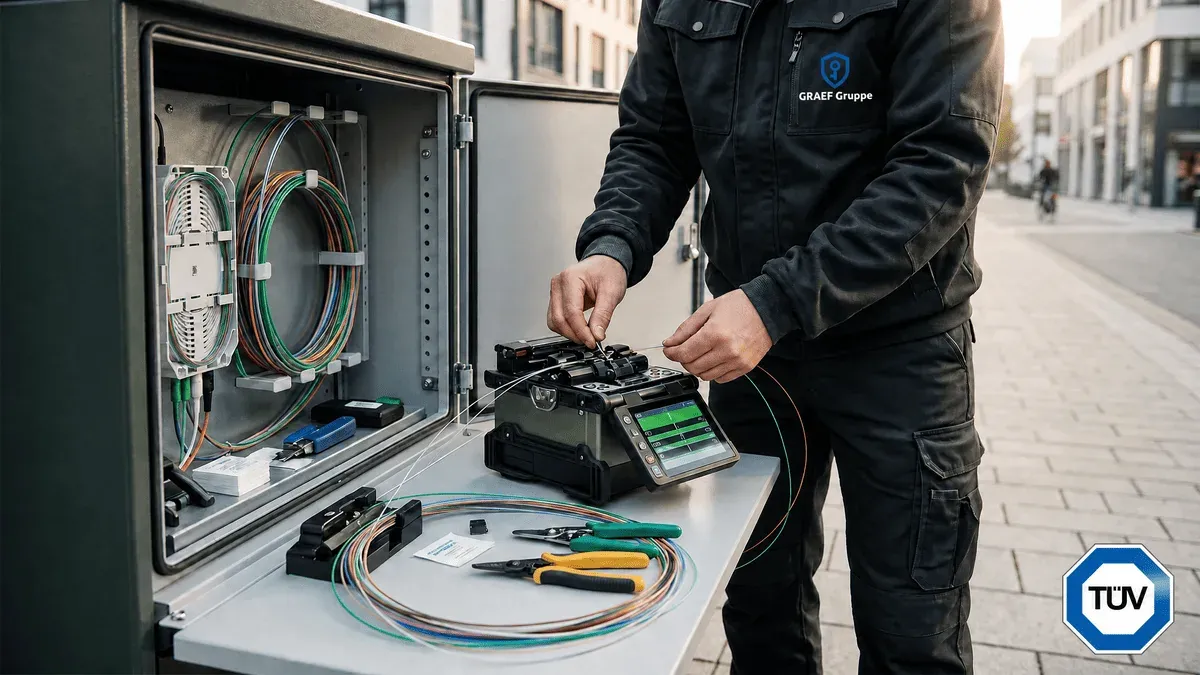
A modern and efficient fiber optic infrastructure is the foundation for reliable communication, digital work processes, and long-term scalable networks. The GRAEF Group has the qualification as TÜV-certified fiber optic splicer and leads professionally GF assembly work on the FTTH network after ZTV-TKNetz 48A off.
Our work is carried out in accordance with the requirements of the corresponding certification by Telekoem. This ensures a careful, structured and professional implementation of fiber optic installations – from the precise splicing of individual fibers to the expert installation within FTTH network infrastructures.
Fiber optic as the foundation of modern digital infrastructure
The requirements for communication networks are continuously growing. Companies, public institutions, educational facilities, residential properties, and industrial plants require stable connections for cloud-based applications, telephony, data transmission, video conferencing, security solutions, and interconnected technical systems.
Compared to traditional copper wiring, fiber optic offers a high potential for fast and reliable data transmission. Especially in the context of FTTH networks – that is, fiber optic connections directly to buildings or user units – the quality of each individual installation plays a crucial role.
Processing errors, insufficiently protected fibers, or an improperly executed connection can compromise the transmission quality. Therefore, installing fiber optic cables requires not only suitable tools but above all qualified personnel, precise workflows, and clean documentation of the steps taken.
What does fiber splicing mean?
In fiber splicing, two fibers are permanently and as loss-free as possible connected to each other. To do this, the fibers are first prepared, precisely aligned, and connected using a special splicing device. The connection is then protected, organized in the designated storage system, and secured for further operation.
This work requires special care: glass fibers are very fine and sensitive. Even the smallest impurities, damage, or inaccuracies can affect the quality of the connection. Therefore, a qualified execution is an important component for the long-term performance of a fiber optic line.
TÜV-certified expertise for GF assembly work
The GRAEF Group is represented as TÜV-certified fiber optic splicer Qualified. This certification underscores our technical expertise in the processing and connection of fiber optic cables. Our team applies GF assembly techniques with the goal of creating a technically clean and reliable foundation for the respective network infrastructure.
Our services include installation work on FTTH networks according to ZTV-TKNetz 48A. The implementation has been certified by Telekoem and is based on the requirements for professional telecommunications networks. For contractors, this means a clear quality standard for work that is essential for the subsequent functionality and fault-tolerance of the network.
Each project brings its own set of constraints. These include, for example, the existing route design, the structural situation, handover points, distribution areas, building entrances, and the further use of the infrastructure. Careful coordination helps to plan the work efficiently and to integrate the fiber optic connections appropriately into existing technical structures.
Important: A fiber optic connection is only as reliable as its proper installation. Precision in splicing, clean protection of the connection, and organized cable routing are crucial for the stable operation of the infrastructure.
FTTH installation for businesses, facilities and connected objects
FTTH networks are not only relevant for private households. Companies, public institutions, medical facilities, commercial properties, and industrial plants also benefit from a high-performance fiber optic connection. The infrastructure creates the prerequisite for reliably transmitting large amounts of data and for further developing digital applications in the long term.
Especially in the Industry Stable data connections are becoming increasingly important. Production processes, technical control rooms, remote maintenance, building technology and connected security applications place high demands on the communication infrastructure. A professionally installed fiber optic line provides a reliable technical basis for this.
Also for the Public sector A sustainable network infrastructure is of great importance. Administrative offices, educational institutions, and municipal properties require secure and high-performance connections to reliably support digital services, internal communication, and modern work processes.
Think together about fiber optic technology and security technology
Fiber optic is an essential component of digital building and security concepts. Through appropriate network infrastructure, communication solutions, IT systems, and professional security applications can be interconnected, among other things.
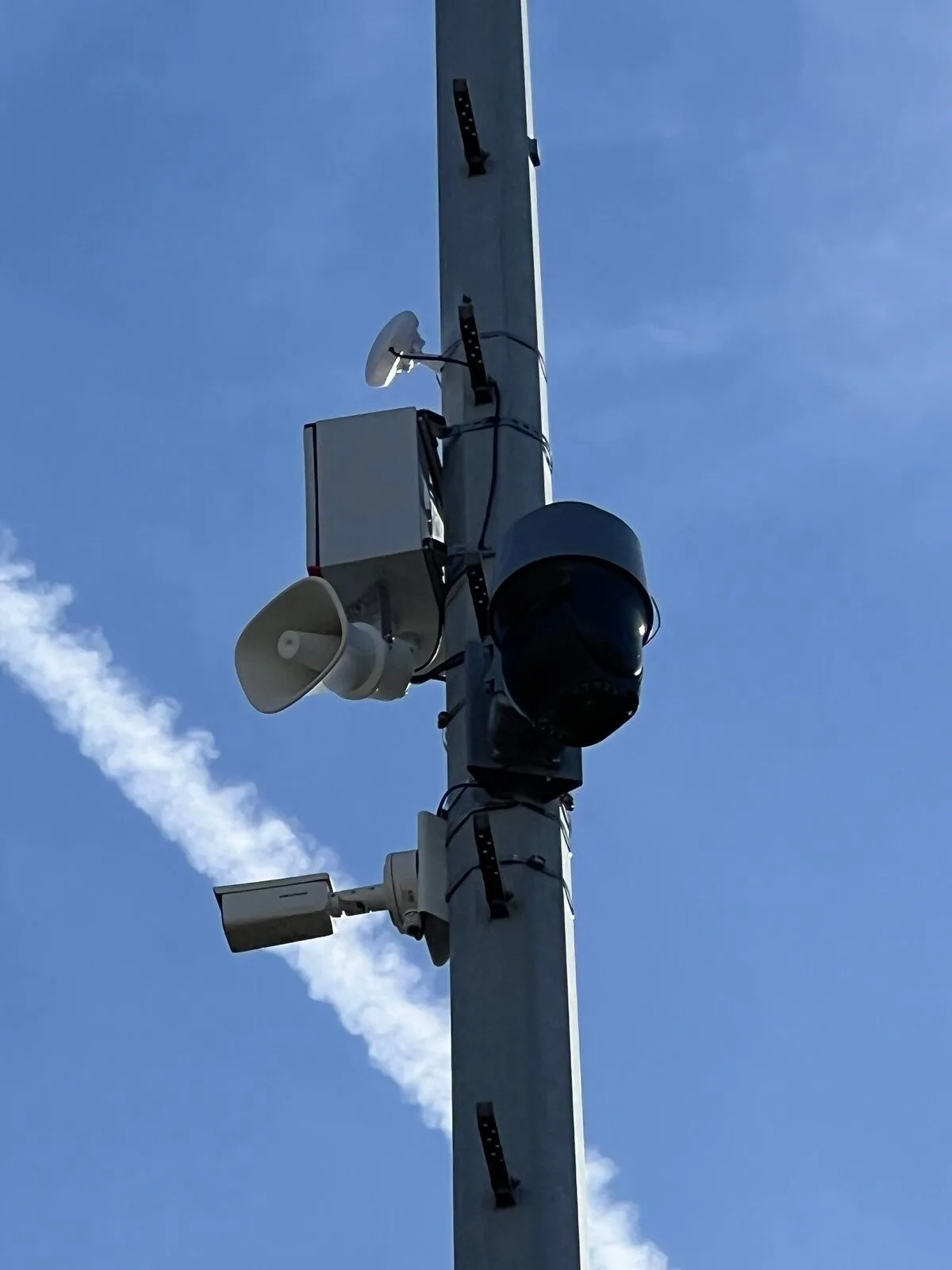
A modern one Video surveillance For example, it requires a stable transmission infrastructure, especially when multiple cameras, high-resolution recordings, or central evaluation stations are used. Proper planning and installation of the underlying cabling supports reliable overall functionality.
Precise design for long-term reliable connections
The details matter in FTTH installation work. The preparation of the fibers, the precise splicing, the secure storage, the protection of the splicing point, and the structured guidance of the cables must be considered as a cohesive process. The goal is to achieve a solution that not only works during commissioning but also remains serviceable and traceable in the long term.
The GRAEF Group combines experience in the field of technical infrastructure with a high standard of meticulous assembly. As a TÜV-certified fiber optic splicing specialist, we professionally perform GF assembly work on the FTTH network in accordance with ZTV-TKNetz 48A and support clients in realizing efficient fiber optic connections.
Conclusion
High-quality FTTH infrastructure begins with precise installation. With our TÜV certification as a fiber optic splicer and the certification for GF installation work on the FTTH network according to ZTV-TKNetz 48A by Telekoem, the GRAEF Group stands for professional fiber optic work and a reliable commitment to quality.
Whether for companies, public facilities, industrial sites or networked buildings: professionally executed splicing and assembly work creates the technical foundation for efficient and future-proof communication.
More interesting topics for you
- Software development for digital business processes
- Security technology for professional protection concepts
- Security solutions for logistics and warehouse operations
- Access control systems for sensitive areas

Contributions from the practical experience of our installers, project managers and software developers. The group is led by founder Peter Gräf, a DGuSV-certified expert in security technology.
Our team
 German
 English