

 Deutsch
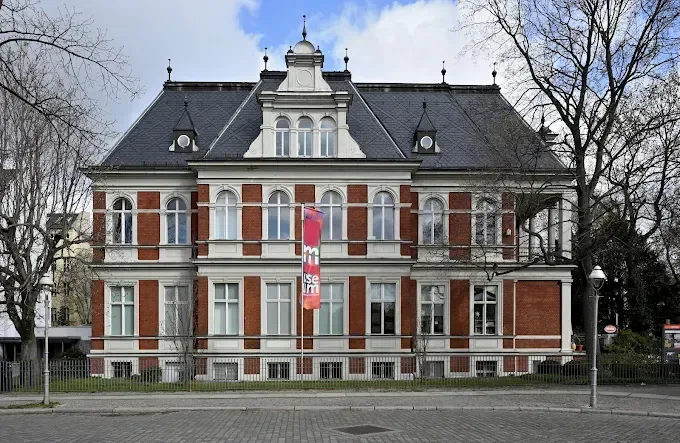
The GRAEF Group advised on the EMA project Villa Oppenheim and developed the safety planning for the listed building. Villa Oppenheim (also known as „Villa Sorgenfrei“) has been the location of the Charlottenburg-Wilmersdorf Museum since 2012 and, due to its historical character, requires special sensitivity when integrating security technology. Our goal was a holistic protection concept that aligns monument preservation, museum operations and modern security requirements.
The planning services included site surveys, risk analyses, the selection of suitable EMA components, and coordination with heritage protection authorities and the operator. More information about our consulting services can be found here: Planning & Consulting — GRAEF Alarm Systems Berlin.
The Villa Oppenheim: Historical context and usage requirements
The Villa Oppenheim was built between 1881 and 1882 and today serves as a home and history museum for Charlottenburg-Wilmersdorf. As a publicly accessible museum with permanent exhibitions and changing special exhibitions, the building places requirements on protection, visitor guidance and accessibility that go beyond normal object profiles.
Project requirements and planning priorities
Several requirements were central to the security planning for Villa Oppenheim:
- Gentle integration of the intrusion alarm system (EMA) without visible impairment of the historical structure
- Protection of sensitive exhibition objects and collection areas
- Access management for staff, curators and suppliers while simultaneously operating for the public
- Video surveillance concepts for outdoor areas and critical access points, while respecting data protection and museum-related requirements
- Coordination with heritage protection authorities, operators and authorities, and the creation of reliable documentation
Risk assessment and prioritization
The GRAEF Group conducted a structured risk analysis to identify particularly vulnerable areas (storage rooms, archives, exhibition spaces containing valuable objects). Based on this, protection zones were defined and technical measures prioritized.
Technical solutions — discreet, reliable, and maintainable
For listed buildings, we recommend components and installation methods that require low penetration depths: small, wire-connected or wireless detectors with discreet housings, flush-mounted door contacts with minimal holes, and concealed cable routes in existing installation shafts. The video surveillance has been designed so that cameras and housings remain visually discreet and respect the views from public areas.
Communication, cyber resilience and system integration
An essential component of the concept was the secure communication of the EMA components: encrypted transmission paths, redundant reporting paths, and defined interfaces to operator and emergency response systems. Furthermore, we have implemented easily maintainable system architectures that enable subsequent adjustments or expansions without extensive interventions.
Coordination with authorities, documentation and handover to the operator
The measures were planned in close coordination with the relevant heritage protection authorities and the museum operator. The handover of the project included complete documentation: site plans, wiring diagrams, authorization concepts, inspection and acceptance protocols, as well as training for staff and service/maintenance plans.
Why expert planning is crucial
In historic buildings, early and expert planning prevents subsequent, costly corrections and protects both the building structure and the collection. GRAEF combines technical expertise with experience in regulatory coordination — this reduces project risks and ensures long-term operation.
Further information and contact
More information about our consulting services can be found here: Planning & Consulting — GRAEF Alarm Systems Berlin. Information about Villa Oppenheim and the museum operation: Museum Charlottenburg‑Wilmersdorf in the Villa Oppenheim and a summary in the museum portal: Museum Portal Berlin.

Contributions from the practical experience of our installers, project managers and software developers. The group is led by founder Peter Gräf, a DGuSV-certified expert in security technology.
Our team
 German
 English