
Video-monitored areas: Legal basis and possible applications
Find out more about the legal basis and possible uses of video-monitored areas. Security meets data protection.
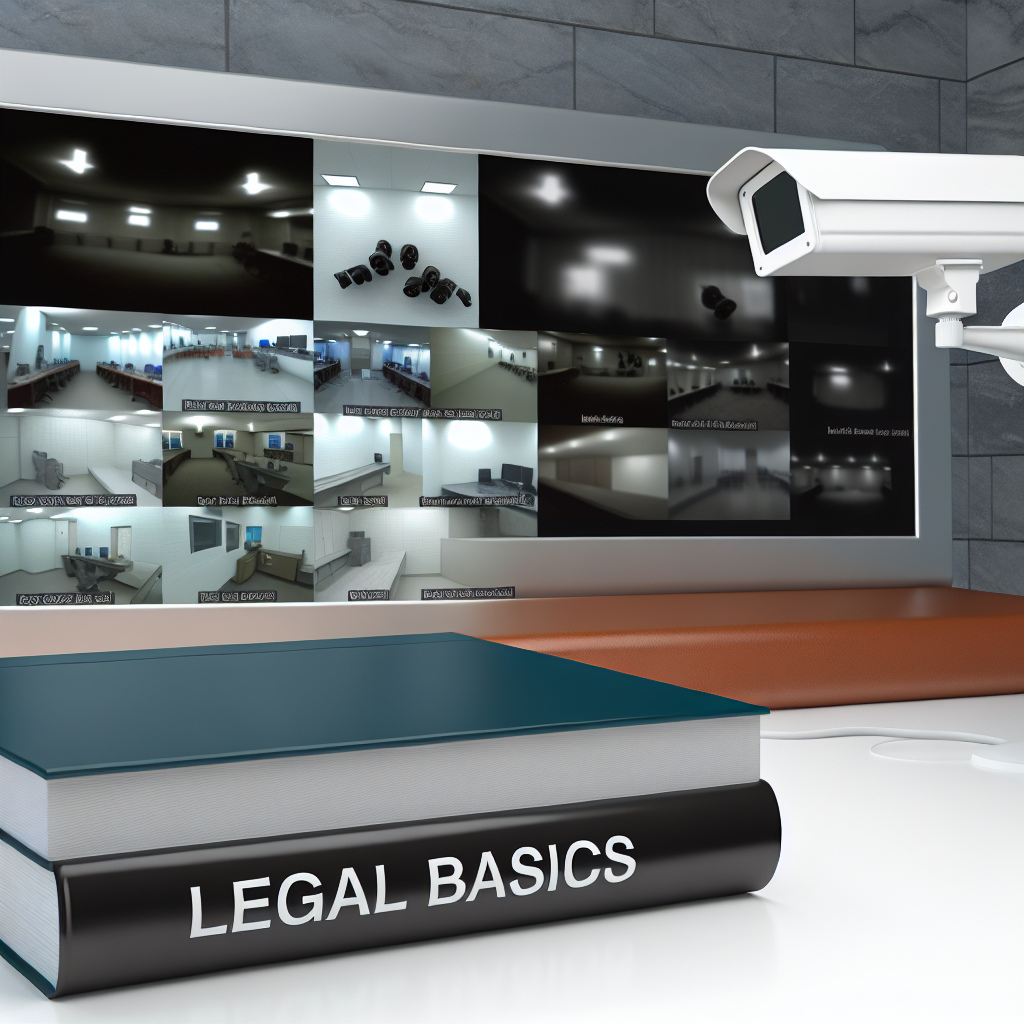
Video surveillance is an important tool for securing public and private areas. It is not only used to prevent crime, but also to solve crimes. But what is the legal basis and what possible applications are there? We address these questions in this article.
Legal basis of video surveillance
The legal basis for video surveillance in Germany is governed by the Federal Data Protection Act (BDSG) and the General Data Protection Regulation (GDPR). In principle, video surveillance is only permitted if it is necessary to safeguard legitimate interests for specifically defined purposes and there are no indications that the interests of the data subjects worthy of protection prevail.
Note on AI-generated content: The content of this blog is created with the help of advanced artificial intelligence. Although we strive to always provide you with accurate and useful information, questions or ambiguities may remain. In such cases, our experts will be happy to help you. Please do not hesitate to contact us using the details below. Our specialists are true experts in their field and will be happy to help you!

Contact options:

 Feedback form: Fill out the form
Email: vertrieb@graef-gruppe.de
Phone: +493069202294
We look forward to your queries and to helping you with any concerns you may have!
Video surveillance must also be transparent. This means that the persons concerned must be informed about the video surveillance. This is usually done by means of a clearly visible sign that indicates the video surveillance.
Possible uses of video surveillance
Video surveillance can be used in various areas. Here are some examples:
- Public places: In public places such as train stations, airports or shopping centers, video surveillance is used to ensure the safety of visitors and to prevent crime.
- Companies: In companies, video surveillance is used to ensure the safety of employees and customers and to protect property and trade secrets.
- Private areas: In private areas, video surveillance is often used to deter burglars and ensure the safety of residents.
Video surveillance and data protection
Video surveillance must always be in line with data protection. This means that the recordings may only be used for the specified purpose and may not be stored for longer than necessary. In addition, the data subjects have the right to obtain information about the stored data and, in certain cases, to request its deletion.
Compliance with these requirements is monitored by the data protection authorities. Significant fines can be imposed for violations.
Video-monitored areas: A conclusion
Video surveillance is an effective means of securing public and private areas. It serves to prevent and solve crimes and can contribute to the safety of people. However, it must always comply with data protection regulations. It is therefore important to find out about the legal basis before setting up video surveillance and to comply with it.
Video-monitored areas: Legal basis and diverse application possibilities
In summary, it can be said that video-monitored areas can play an important role in both public and private contexts. They offer an effective way of ensuring security and preventing crime. At the same time, however, the legal principles must be observed and data protection guaranteed. However, with the right planning and implementation, video surveillance can be a valuable tool for improving security.