

 Deutsch

RutOS 7.07: New horizons in network management
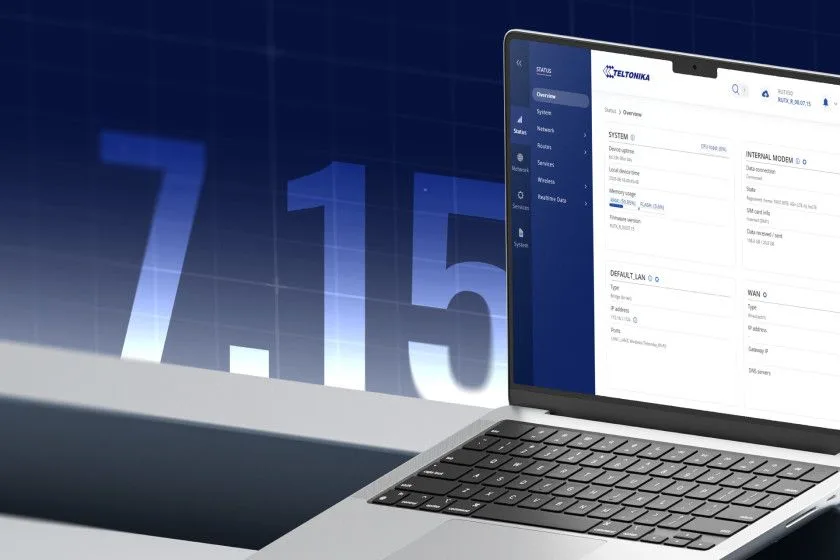
Teltonika recently released RutOS 7.07, a significant update that offers numerous new features and improvements for network management. This update aims to increase the flexibility, security, and user-friendliness of your network solutions.
Advanced security features and customization options
RutOS 7.07 brings a variety of security features, including improved event logging that allows for logging to be sent to multiple servers. This flexibility helps manage the flow of information efficiently while ensuring data security. Additionally, the new time-based login lock allows for a flexible response to failed login attempts, reducing the risk of accidental locks.
New features for improved connectivity
One of the most exciting innovations is the implementation of Virtual Routing and Forwarding (VRF), which allows multiple routing tables to be operated on the same router. This improves network performance by allowing overlapping IP addresses to be used without conflicts. The introduction of the Mesh mode for Wi-Fi access points such as the TAP100 and TAP200 further improves network stability and connectivity.
Improved user experience and device support
Teltonika is introducing an improved user experience with the new update by introducing automatic notifications about network problems and firmware updates. This reduces manual effort and makes managing your network solutions more efficient. Additionally, the update supports new devices and technologies such as Framed Routing for 5G devices, simplifying the networking and integration of new technologies.
The RutOS 7.07 update from Teltonika is a significant step forward for anyone who relies on reliable and secure network solutions. With these updates, Teltonika remains at the forefront of technology development, helping its customers make their networks more efficient and secure.
What are the main new features in RutOS 7.07?
RutOS 7.07 introduces comprehensive new features: including three reset options (factory settings, system parameters, or user defaults), enhanced event logs across multiple servers, the Internet performance widget, new radius MAC authentication, and virtual routing instances (VRFs).
How does the new Radius MAC login work?
Users can now authenticate with MAC addresses instead of usernames and passwords on the Wi‑Fi hotspot – ideal for retail environments, visitor path tracking, and targeted advertising.
What are the benefits of VRF (Virtual Routing and Forwarding)?
VRF allows multiple independent routing tables to be operated on a single device — this allows different network segments with overlapping IP addresses to be cleanly separated and managed.

Contributions from the practical experience of our installers, project managers and software developers. The group is led by founder Peter Gräf, a DGuSV-certified expert in security technology.
Our team




 German
 English