

 Deutsch
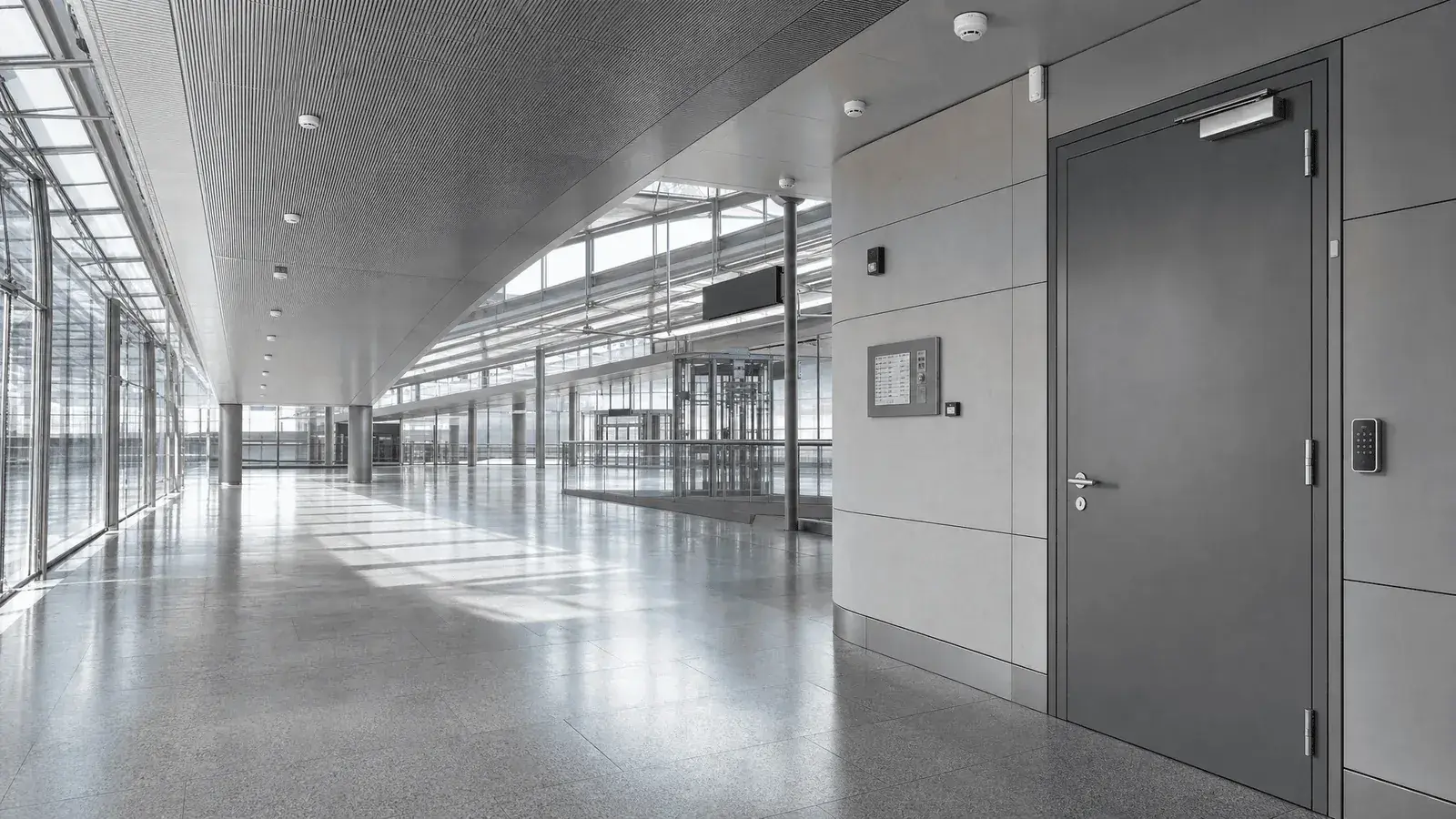
The GRAEF Group has implemented work on the installation of security and fire protection technology at Berlin railway stations. The project took place within the construction period specified in a public notice. June 14 to December 12 Instead. The focus of our services was not on track or switchgear technology, but on reliable protection of building areas and technical infrastructure through fire detection technology, intrusion detection technology, access control, alarm systems, and surge protection. Especially on transport infrastructure, a structured approach is essential. Fire protection technology critical for early detection of risks and for supporting the understanding of security processes.
Project period for measures at Berlin stations
The work was carried out as part of an extensive construction period in Berlin, which was scheduled from June 14 to December 12. During this period, measures were also taken regarding fire safety at stations and on the roof of the halls. The GRAEF Group installed safety technology systems for the relevant station areas.
Such projects place high demands on planning, coordination, and execution. Train stations are complex, publicly accessible buildings with different functional zones: access points, technical spaces, operational areas, traffic areas, and safety-related ancillary spaces must all be appropriately protected. At the same time, existing infrastructure structures, the ongoing use of the surrounding area, and prescribed construction procedures must be taken into account.
The goal of a professional security solution lies not only in the installation of individual devices. What is crucial is the interplay of detection, monitoring, alarm transmission, operation, power supply, and documented operating procedures. The components used were therefore combined into a coordinated system.
Focus areas of the implemented security infrastructure
- Fire alarm and alarm technology for safety-relevant areas
- Burglar alarm technology with central control and operation
- Access control at entrance doors with electronic security locks
- Motion detectors for monitoring interior areas
- Optically-acoustic external alarm and technical signaling
- Overvoltage, earthing and potential compensation concepts
Fire alarm and burglary protection with Honeywell technology
Among other things, Honeywell technology was used for the security architecture. The fire alarm control center from Honeywell ESSER It forms the basis for recording, forwarding and clearly assigning fire alarm signals from monitored areas. In public and technically demanding buildings, this is an essential component of a structured fire protection concept.
The Honeywell MB-Secure PRO intrusion detection system was implemented with a baseplate, a base license, and a license for up to 512 users. The system was supplemented with I/O expansion modules, relay modules, a siren module, and LED and LCD control panels. These components provide the technical basis for specifically mapping out notifications, switching functions, and alarms within the security concept.
To securely house the central control system, a central cabinet and a housing for MB-Secure and MB-Secure PRO were installed. The power supply is supported by batteries with a 12 volt capacity of 24 Ah. A operating manual for the intrusion alarm system and the associated card case also support the orderly documentation of operations.
Summary: Central units as the core of the security logic
The combination of the fire alarm system and intrusion alarm system enables a clearly structured security architecture. Alerts from the connected areas can be processed systematically, while control and documentation concepts support safe operation.
Practical note: In security systems in transport buildings, planning, installation, and commissioning must be coordinated with the specific use, existing infrastructure, and applicable requirements. The selection of individual components does not replace object-specific security planning.
Access control and monitoring at entrance doors
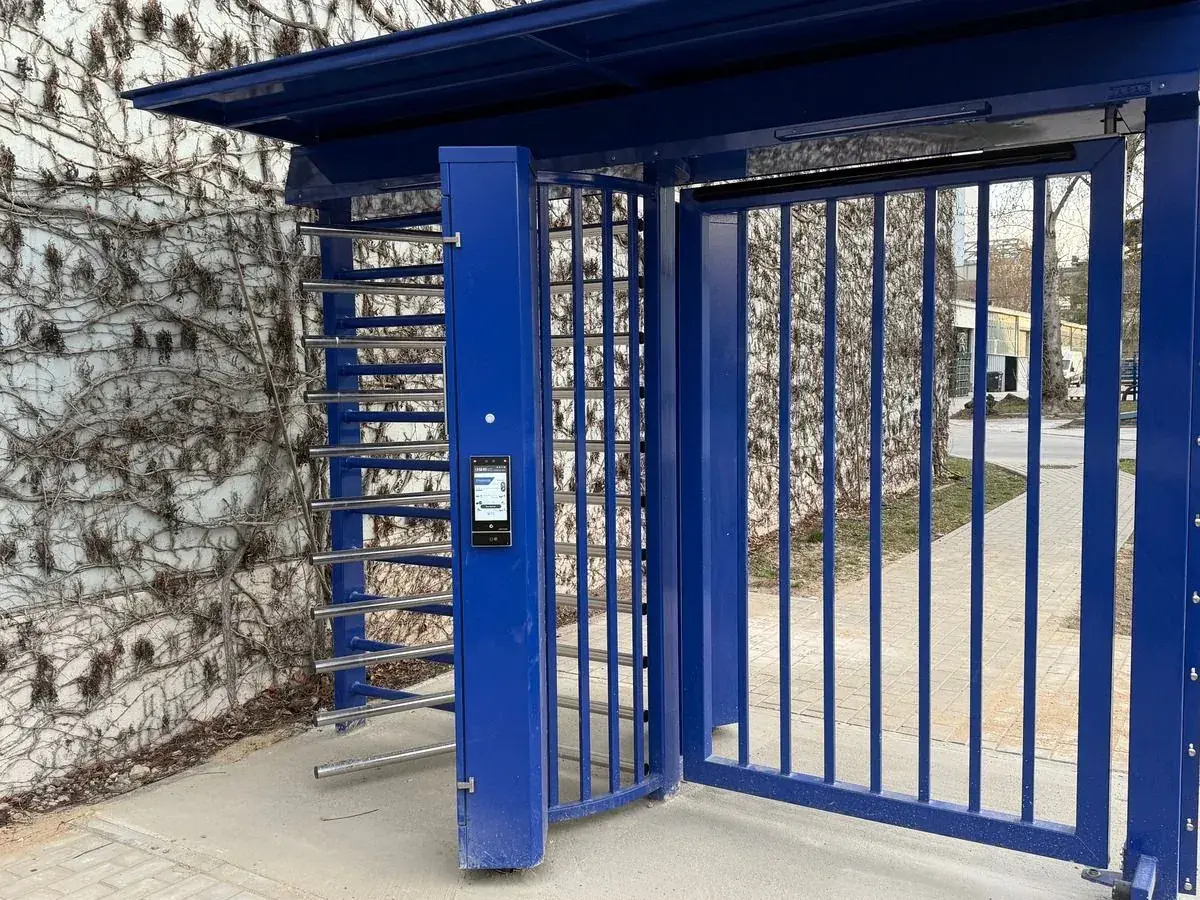
Another focus was on securing entrance doors. DCM Plus door modules were used for MB and ACS, as well as luminAXS proX readers with 16 keys. This allows access processes to be integrated into the security structure in a controlled manner. View and weather protection enclosures for the luminAXS readers in accordance with VdS help protect external readers from weather influences.
The door system also included E-safety locks 809 in various designs – among others for DIN right-handed doors, inward-opening doors, and DIN left-handed doors that open outwards. These were complemented by matching flat locking plates and built-in magnetic contacts for opening monitoring according to EN Grade 3 or VdS Class C.
The interior monitoring was implemented using Viewguard DUAL AM motion detectors with a flat design based on the BUS-2 protocol. Adjustable joints allow for targeted orientation of the detectors. Proper placement is essential to reliably detect movements in relevant areas and minimize disruptive influences as much as possible.
As an additional service, the GRAEF Group also offers professional access control systems for buildings with different security and organizational requirements.
Alarming, network technology and protection against overvoltage
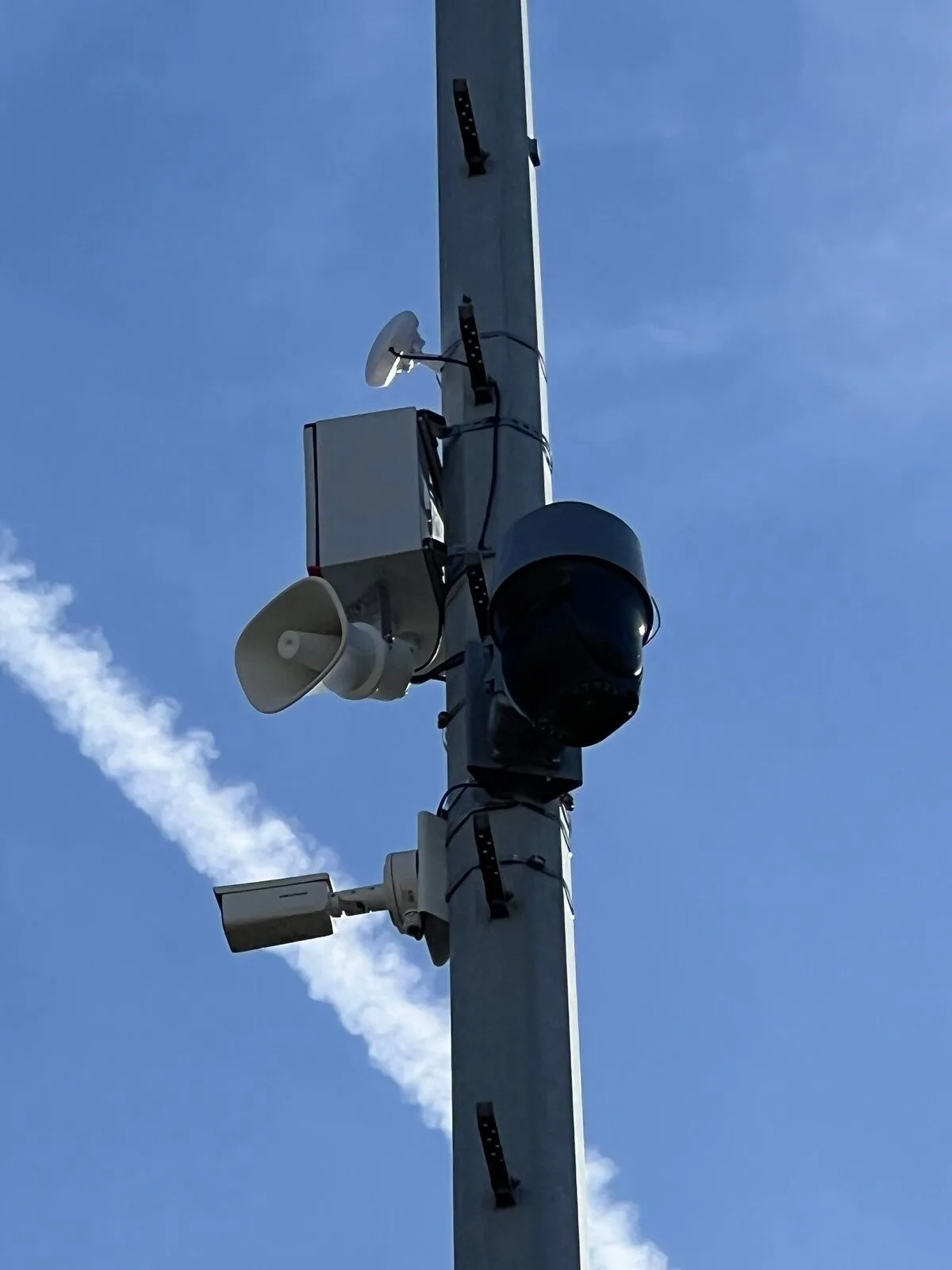
For external alarm notification, a compact alarm system with an optical and acoustic signal generator has been provided. This combination can help to signalise an alarm event in a perceivable manner. At the same time, technical protective measures for energy and communication routes have been integrated.
Overvoltage protection includes, among other things, the Blitzductor XT ML4 BE 24 lightning conductor, base elements, EMV spring terminals, protective conductor terminals, and DEHNcord surge arresters. Additionally, a potential compensation rail in accordance with VDE 0618, coaxial overvoltage arresters, and associated earthing cables were used. These measures help protect connected safety components against overvoltage events and create a reliable technical infrastructure.
The communication connection was supplemented with an AirLancer Extender O-360Q-5G outdoor antenna and a LANCOM 1800EF-5G VPN router for ISS DB. In addition, distribution units, socket solutions, a 19-inch socket strip with surge protection and a rack-mount system were added. This took into account important prerequisites for the power supply, networking and remote communication of the security infrastructure.
Conclusion: Networked protection for complex station areas
The project demonstrates the importance of a holistic approach to fire, burglary and access protection in publicly used transport infrastructure. By combining Honeywell ESSER fire detection technology, MB-Secure intrusion detection technology, electronic access control, alarm systems and surge protection, a security infrastructure tailored to the respective areas was created. The GRAEF Group implements such projects with professional planning, professional installation and a clear focus on long-term operational safety.
Other interesting articles
More topics from fire safety and security technology
- KIDDE Global Solutions – Systems for professional fire detection
- SmartCell – wireless extensions for fire protection projects
- Security technology for the public sector
- References of the GRAEF Group

Contributions from the practical experience of our installers, project managers and software developers. The group is led by founder Peter Gräf, a DGuSV-certified expert in security technology.
Our team
 German
 English