
Zutrittskontrolle in Galerien: Kunst und Sicherheit vereint
"Zutrittskontrolle in Galerien: Vereint Kunst und Sicherheit. Optimieren Sie den Schutz Ihrer Kunstwerke mit effektiven Zutrittskontrollsystemen."
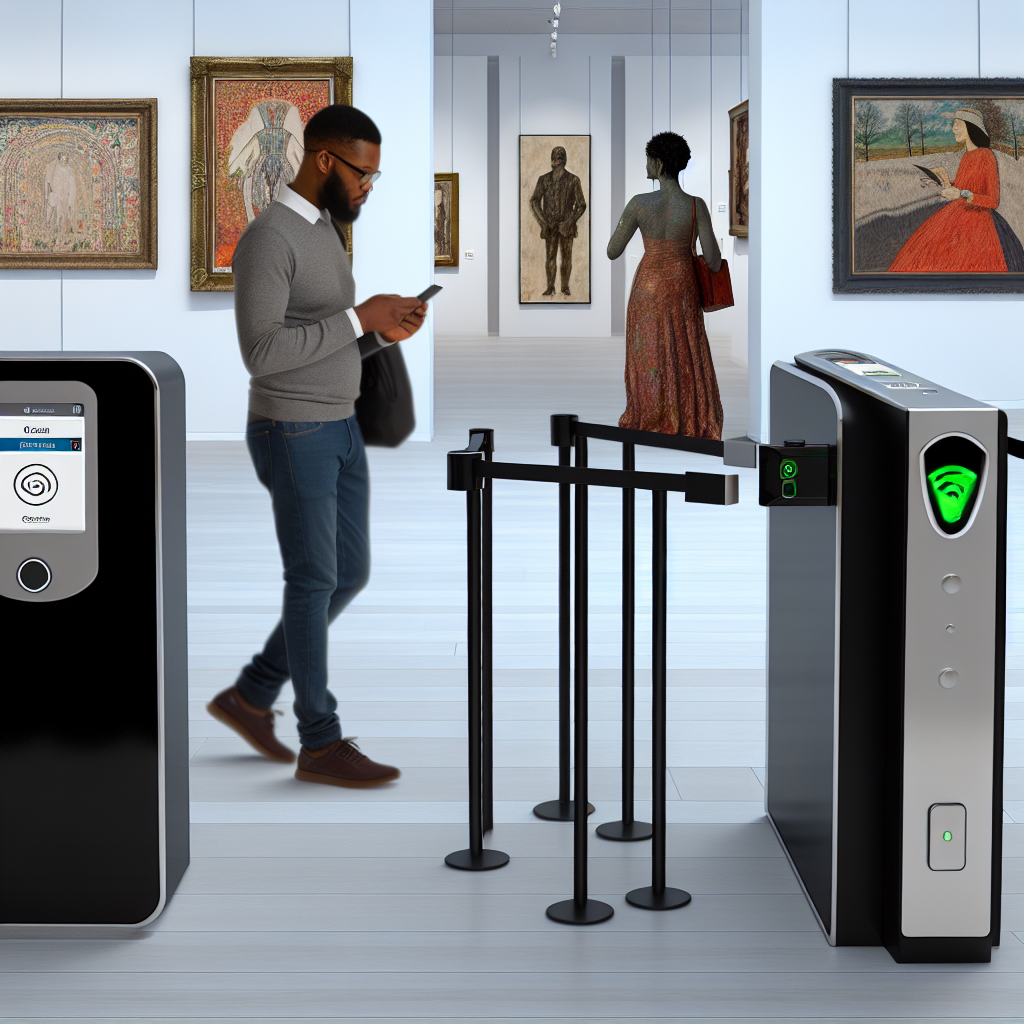
In der Welt der Kunst sind Galerien die Tempel, in denen Kunstwerke ausgestellt und verehrt werden. Doch wie in jedem Tempel, ist auch in Galerien die Sicherheit von größter Bedeutung. Hier kommt die Zutrittskontrolle ins Spiel, die Kunst und Sicherheit auf einzigartige Weise vereint.
Die Zutrittskontrolle in Galerien ist ein wesentlicher Aspekt, um die Sicherheit der ausgestellten Kunstwerke zu gewährleisten. Sie dient nicht nur dazu, Diebstahl und Vandalismus zu verhindern, sondern auch dazu, die Integrität der Kunstwerke zu bewahren. Ein effektives Zutrittskontrollsystem kann dazu beitragen, dass nur autorisierte Personen Zugang zu bestimmten Bereichen der Galerie haben.
Hinweis zu AI-generierten Inhalten: Die Inhalte dieses Blogs werden mithilfe fortschrittlicher künstlicher Intelligenz erstellt. Obwohl wir uns bemühen, Ihnen stets präzise und nützliche Informationen zu bieten, kann es vorkommen, dass Fragen oder Unklarheiten bestehen bleiben. In solchen Fällen stehen Ihnen unsere Experten gerne zur Verfügung. Zögern Sie nicht, uns über die unten aufgeführten Kontaktmöglichkeiten zu erreichen. Unsere Spezialisten sind wahre Kenner ihres Fachs und helfen Ihnen gerne weiter!

Kontaktmöglichkeiten:

Feedback-Formular: Formular Ausfüllen
E-Mail: vertrieb@graef-gruppe.de
Telefon: +493069202294
Wir freuen uns auf Ihre Rückfragen und darauf, Ihnen bei jedem Anliegen behilflich zu sein!
Wie funktioniert die Zutrittskontrolle in Galerien?
Die Zutrittskontrolle in Galerien kann auf verschiedene Weisen umgesetzt werden. Einige Galerien verwenden traditionelle Methoden wie Schlüssel und Schlösser, während andere fortschrittlichere Technologien wie biometrische Scanner oder RFID-Technologie einsetzen. Unabhängig von der gewählten Methode ist das Ziel dasselbe: den Zugang zu bestimmten Bereichen der Galerie zu kontrollieren und zu beschränken.
- Schlüssel und Schlösser: Dies ist die traditionellste Form der Zutrittskontrolle. Sie ist einfach zu implementieren und zu verwalten, bietet jedoch nicht das höchste Sicherheitsniveau.
- Biometrische Scanner: Diese Geräte verwenden einzigartige körperliche Merkmale wie Fingerabdrücke oder Iris-Scans, um die Identität einer Person zu bestätigen. Sie bieten ein hohes Maß an Sicherheit, sind jedoch teurer in der Anschaffung und Wartung.
- RFID-Technologie: RFID steht für Radio Frequency Identification. Mit dieser Technologie können Personen durch das Tragen von RFID-Tags identifiziert und verfolgt werden. Sie ist kostengünstig, einfach zu implementieren und bietet ein hohes Maß an Sicherheit.
Die Bedeutung der Zutrittskontrolle in Galerien
Die Zutrittskontrolle in Galerien ist nicht nur für die Sicherheit der Kunstwerke von entscheidender Bedeutung, sondern auch für den Schutz des Galeriepersonals und der Besucher. Ein effektives Zutrittskontrollsystem kann dazu beitragen, potenzielle Bedrohungen zu minimieren und ein sicheres Umfeld für alle zu schaffen.
Ein gutes Beispiel für die Bedeutung der Zutrittskontrolle in Galerien ist der Fall des Isabella Stewart Gardner Museums in Boston, USA. Im Jahr 1990 wurden 13 Kunstwerke im Wert von 500 Millionen Dollar gestohlen, weil das Museum kein effektives Zutrittskontrollsystem hatte. Dieser Fall unterstreicht die Notwendigkeit einer effektiven Zutrittskontrolle in Galerien.
Zutrittskontrolle Galerien: Kunst und Sicherheit vereint
Die Zutrittskontrolle in Galerien ist ein perfektes Beispiel dafür, wie Kunst und Sicherheit Hand in Hand gehen können. Durch die Implementierung effektiver Zutrittskontrollsysteme können Galerien nicht nur die Sicherheit ihrer Kunstwerke gewährleisten, sondern auch ein sicheres und einladendes Umfeld für Besucher und Personal schaffen.
Die Zutrittskontrolle in Galerien ist mehr als nur eine Sicherheitsmaßnahme. Sie ist ein wesentlicher Bestandteil des Galeriebetriebs, der dazu beiträgt, die Integrität der Kunstwerke zu bewahren und ein positives Erlebnis für alle zu gewährleisten.
Die Zukunft der Zutrittskontrolle in Galerien sieht vielversprechend aus. Mit der Weiterentwicklung der Technologie werden wir wahrscheinlich eine Zunahme von biometrischen Scannern und RFID-Technologie sehen, die ein noch höheres Maß an Sicherheit bieten. Darüber hinaus könnten wir auch eine Zunahme von Cloud-basierten Zutrittskontrollsystemen sehen, die eine noch größere Flexibilität und Kontrolle bieten.
Unabhängig von den spezifischen Technologien, die verwendet werden, ist klar, dass die Zutrittskontrolle in Galerien weiterhin eine entscheidende Rolle bei der Gewährleistung der Sicherheit und Integrität der Kunstwerke spielen wird.