
Traffic Management der Zukunft KiwiVision
Smart City Berlin vertraut auf Verkehrsdaten von KiwiVision
Mit der KiwiVision Software analysieren Berliner Forscher detailliert den Verkehr in der deutschen Hauptstadt, ohne in die Persönlichkeitsrechte von Verkehrsteilnehmern einzugreifen. Für die Implementierung zeichnete die GRAEF Gruppe (www.graef-gruppe.de) verantwortlich. Der Genetec Partner ist spezialisiert auf Beratung, Planung, Installation und Wartung von Video-, Alarm-, Zeiterfassungs- und IT-Technik. Zu den Kunden von GRAEF zählen unter anderem Siemens, Jaguar und die Charité.
Von Autofahrern und Fußgängern unbemerkt wird rund um den Berliner Ernst-Reuther-Platz an der Zukunft des innerstädtischen Straßenverkehrs gearbeitet. Im Rahmen von „Smart City Berlin“ und anschließenden Projekten erforscht dort ein Konsortium aus Unternehmen wie T-Systems, Cisco, TÜV Nord und Einrichtungen der TU Berlin, welche Chancen sich durch die Digitalisierung der Straßenumgebung für autonomes Fahren, Verkehrsflussmanagement und Umweltschutz in den Metropolen des 21. Jahrhunderts ergeben. Schon zu Projektbeginn stellte sich aber eine Herausforderung: Einerseits ist die präzise Erfassung und Kategorisierung aller Verkehrsteilnehmer unverzichtbare Basis für aussagekräftige Datenmodelle, andererseits stellen das deutsche Datenschutzgesetz und die europäische Datenschutz-Grundverordnung (DSGVO) hohe Anforderungen an den Schutz der Privatsphäre, insbesondere im öffentlichen Raum. Durch KiwiVision konnten diese gegenläufigen Interessen erfolgreich technisch vereint werden.
„Die meisten Projekte zum autonomen Fahren fokussieren sich auf Fahrzeug-basierte Lösungen“, erklärt Dr.-Ing. habil Manzoor Ahmed Khan, Director of Network & Mobility und einer der leitenden Wissenschaftler am Distributed Artificial Intelligence (DAI) Labor der TU Berlin. Dabei werden Fahrzeuge mit Sensoren wie Kameras, Radar, und Lidar (Abstands- und Geschwindigkeitsmessung per Laser) sowie künstlicher Intelligenz (KI) ausgestattet, um bestimmte Situationen vorherzusehen. „Dieser Ansatz ist sicher richtig. Aber durch die Digitalisierung der Straßenumgebung und die Übermittlung der Daten an das Fahrzeug können wir das Prognosefenster deutlich vergrößern, von vielleicht hundert Metern auf zwei Kilometer.“
Berlin wird digital
Zu Forschungszwecken wurden daher am Ernst-Reuther-Platz und entlang der Straße des 17. Juni zahlreiche Kameras und andere Sensoren installiert, die Informationen zu Verkehrsteilnehmern und -dichte, Straßenzustand, Parkplatzbelegung, Ampel-Schaltung und nicht zuletzt auch Wetter liefern. Die immensen Datenmengen werden danach mittels verschiedener, am DAI-Labor entwickelter Machine-Learning- und anderer KI-basierter Verfahren analysiert. Die Einsatzmöglichkeiten der gewonnenen Erkenntnisse sind fast grenzenlos: „Zukünftig können wir Fahrzeuge unter anderem darüber informieren, dass in einem Kilometer die Straße auf sechs Metern vereist oder schlammig ist. Unsere Datenmodelle ermöglichen aber zum Beispiel auch genaue Aussagen darüber, welche Parkplätze am Freitagvormittag wahrscheinlich frei sein werden, und welche Ampelschaltung den Verkehrsfluss an Dienstagen um 13 Uhr begünstigt.“
Basis für solche konkreten Aussagen ist die korrekte Erfassung jedes einzelnen Pkws, Lkws und Busses sowie jedes Fußgängers und Fahrradfahrers. „Wir verfügen über die Daten zu tatsächlich allen Verkehrsteilnehmern, sodass wir den Ernst-Reuther-Platz zu jedem Zeitpunkt simulieren können“, sagt Manzoor Ahmed Khan. „Das ist aber nur möglich, weil wir von Beginn an auf die Rechte der Verkehrsteilnehmer geachtet haben, deren Einwilligung wir ja nicht einholen können. Wir mussten ein tragfähiges Konzept zum Schutz der Privatsphäre vorlegen, das streng geprüft wurde. Ansonsten hätten wir keine Genehmigung erhalten.“
KiwiVision liefert präzise, anonymisierte Daten
Werden Gesichter oder Kfz-Kennzeichen unbeteiligter Verkehrsteilnehmer von einer Kamera erfasst und anschließend gespeichert, so handelt es sich dabei um personenbezogene Daten. Die Sammlung und Verarbeitung solcher Daten wird unter anderem durch die DSGVO begrenzt und reglementiert. Bei Nichtbeachtung der Vorschriften drohen erhebliche Strafen. Werden Personen aber lediglich als Blöcke dargestellt, fehlt der Personenbezug in den Daten. Computer-generierte Darstellungen, die Menschen und Fahrzeuge durch Symbole ersetzen, fallen somit nicht in den Anwendungsbereich der DSGVO.
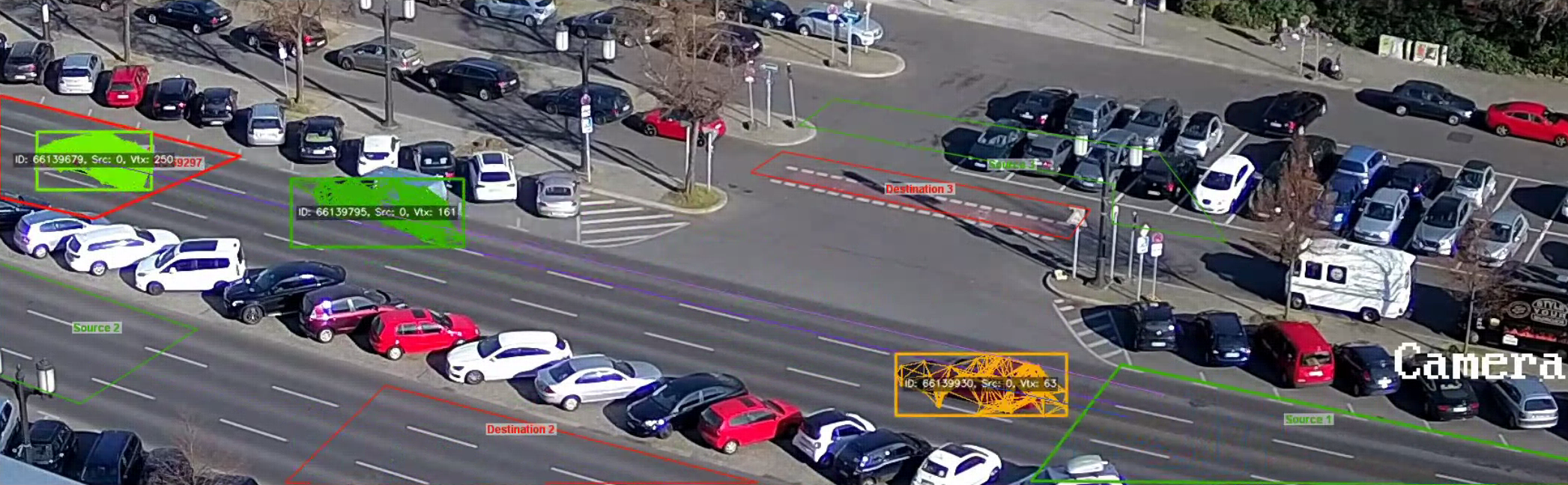
Diesen Umstand hat sich das Berliner Forschungsteam zunutze gemacht: Mit den Kameras wird die KiwiVision Videoanalyse verwendet, die Objekte im Verkehrsfluss erkennt, kategorisiert und die gewonnenen Daten anonymisiert. Die Algorithmen lassen sich dabei auch nicht von verschiedenen Wetterzuständen wie Schnee oder Regen täuschen und identifizieren bewegte ebenso so zuverlässig wie wartende Objekte. Erst nach der Anonymisierung werden die Daten von einer selbstentwickelten IoT-Middleware des DAI-Labors gesammelt und an Verarbeitungssysteme weitergeleitet. In den Auswertungen und Simulationen erscheinen LKWs, PKWs, Fußgänger etc. dann als Kreise, Quadrate oder Dreiecke – mehr Informationen dürfen und wollen die Forscher nicht erhalten. Eine nachträgliche De-Anonymisierung ist unmöglich, denn Aufzeichnungen der Videostreams gibt es nicht. „Weil die Erfassung und Identifikation so zentral für unser Projekt ist, haben wir uns natürliche mehrere Technologien angesehen und Vergleichsstudien durchgeführt“, so Manzoor Ahmed Khan. „KiwiVision hat alle unsere Anforderungen definitiv am besten erfüllt, deshalb haben wir uns für den Einsatz entschieden, was sich im weiteren Verlauf als richtig erwiesen hat.“
Dieselben Algorithmen kommen im Übrigen auch im KiwiVision Privacy Protector von Genetec zum Einsatz. Mit dieser Verpixelungs- und Maskierungslösung können Unternehmen sicherstellen, dass Mitarbeiter und Besucher im Rahmen der Videoüberwachung unkenntlich gemacht werden. Der Privacy Protector integriert sich vollständig in Genetec Security Center, die zentralisierte Plattform für ein vereinheitlichtes Management der gesamten physischen Sicherheitsinfrastruktur. Durch Unterstützung offener Industriestandards ermöglicht Genetec Security Center die Verwaltung aller nicht-proprietären, IP-basierten Kameras, Türschlösser, Sensoren usw. über ein einziges Interface.
Im Gegensatz zum Berliner Forscherprojekt wird der originale Videostream im Unternehmenseinsatz verschlüsselt aufgezeichnet und steht für die Aufklärung von Vorfällen zur Verfügung. Der Zugriff ist dabei durch ein Authentifizierungs-Verfahren abgesichert, bei dem zwei Mitarbeiter spezielle Chipkarten und PINs bzw. Login-Informationen eingeben müssen. Als einzige Lösung hat der Privacy Protector das European Privacy Seal erhalten. Dieses Gütesiegel wird nur nach intensiver technischer und juristischer Prüfung der Kompatibilität von IT-Produkten mit europäischen Datenschutzrichtlinien vergeben. Das Siegel ist zwei Jahre gültig, sodass zertifizierte Produkte immer den neuesten Anforderungen entsprechen.

Weiterer Einsatz von KiwiVision
Intelligenteres Verkehrsmanagement ist eine der großen Herausforderungen unserer Zeit, daher ist die Arbeit der Berliner Forscher noch lange nicht abgeschlossen. Bereits jetzt ist ein weiteres großangelegtes Projekt zu 5G-Mobilkommunikation und autonomem Fahren geplant, bei dem der Ernst-Reuther-Platz und die Straße des 17. Juni eine von sechs europäischen Teststrecken bilden werden. Auch im Rahmen dieses Projektes wird die KiwiVision Videoanalyse wieder die benötigten Informationen liefern. Dazu Manzoor Ahmed Khan: „KiwiVision ist unsere Lösung für anonymisierte Traffic-Daten. Der Support war zu jeder Zeit sehr kooperativ. Aufgrund unserer bisherigen Erfahrungen freuen wir uns daher auf die Zusammenarbeit bei weiteren Projekten.“