
FTTH-Hausanschluss verlängern für die Telekom
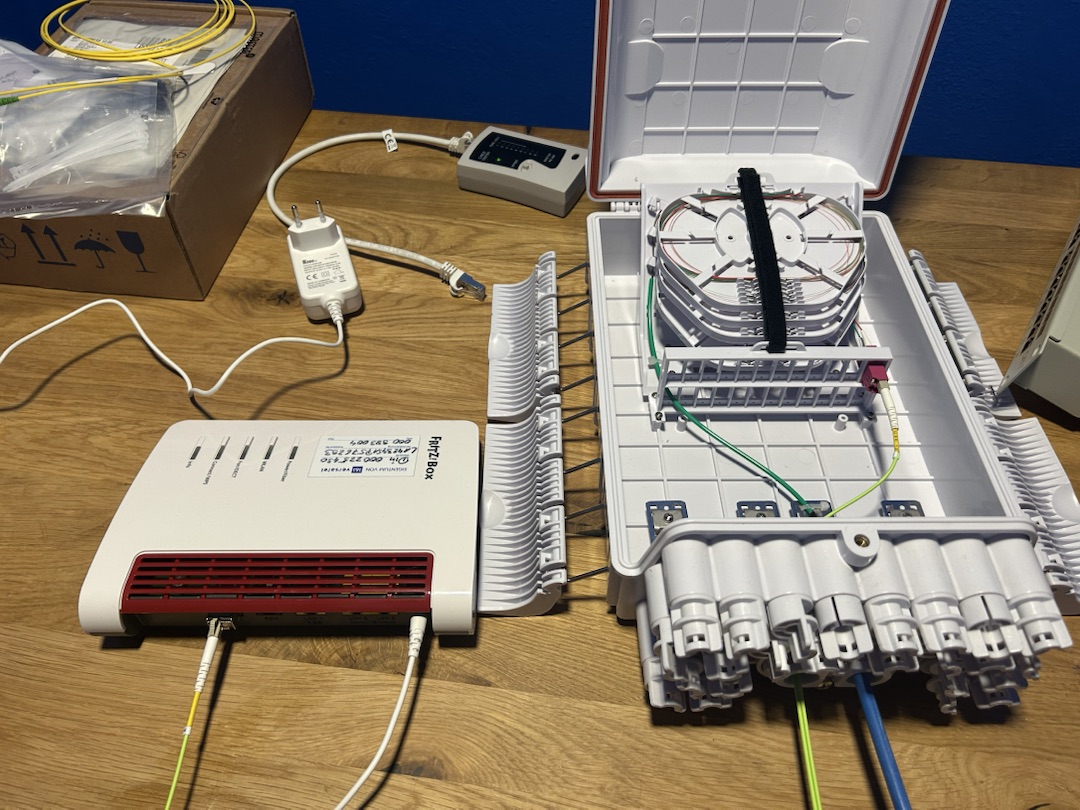
Glasfaser bis ins Gebäude – das ist das Ziel des FTTH-Konzepts (Fiber to the Home). Doch zwischen dem Übergabepunkt im Keller oder an der Grundstücksgrenze und dem eigentlichen Anschlussort im Gebäude liegt oft mehr Strecke, als die ursprüngliche Planung vorgesehen hat. In solchen Fällen ist eine Verlängerung des Hausanschlusses notwendig: Die Glasfaserleitung muss fachgerecht weitergeführt werden, damit der Anschluss tatsächlich nutzbar ist.
Die GRAEF Gruppe hat genau diese Aufgabe für die Telekom übernommen: die Verlängerung von FTTH-Hausanschlüssen – von der Kabelverlegung über die Spleißarbeiten bis zur sauberen Übergabe. Solche Arbeiten erfordern Präzision, Erfahrung im Umgang mit Lichtwellenleitern und ein strukturiertes Vorgehen, damit die Glasfaserverbindung dauerhaft stabil und verlustarm bleibt.
Warum Hausanschlüsse verlängert werden müssen
In der Praxis gibt es verschiedene Gründe, warum ein FTTH-Hausanschluss nicht direkt am geplanten Endpunkt endet:
Gebäudestruktur und Leitungsführung
Ältere Gebäude, komplexe Grundrisse oder nachträgliche Umbauten können dazu führen, dass der ursprünglich geplante Verlegeweg nicht realisierbar ist. In solchen Fällen muss eine alternative Route gefunden und die Leitung entsprechend verlängert werden.
Übergabepunkt und Nutzungsort liegen weit auseinander
Häufig befindet sich der Übergabepunkt (z. B. Hauseinführung oder Keller-Verteiler) weit entfernt vom eigentlichen Nutzungsort – etwa einem Büro im Obergeschoss oder einer Wohneinheit am anderen Ende des Gebäudes. Eine Verlängerung überbrückt diese Distanz sauber und normgerecht.
Nachträgliche Erschließung
Bei Bestandsgebäuden, die nachträglich an das Glasfasernetz angeschlossen werden, ist eine Verlängerung oft der einzige Weg, um den Anschluss bis zum gewünschten Endpunkt zu führen – ohne aufwendige Neuverlegung der gesamten Strecke.
Was bei einer FTTH-Verlängerung technisch gefragt ist
Eine Hausanschluss-Verlängerung ist kein einfaches „Kabel ziehen“. Glasfaser stellt besondere Anforderungen an Handhabung, Verbindungstechnik und Qualitätssicherung.
Kabelverlegung und Leitungsführung
Je nach Gebäude und Situation kommen unterschiedliche Verlegemethoden zum Einsatz: Leerrohre, Kabelkanäle, Unterputzverlegung oder Aufputzinstallation. Entscheidend ist eine saubere, zugentlastete und mechanisch geschützte Führung der Glasfaserleitung, die spätere Wartung und Erweiterungen ermöglicht.
Spleißarbeiten: Verbindung auf höchstem Niveau
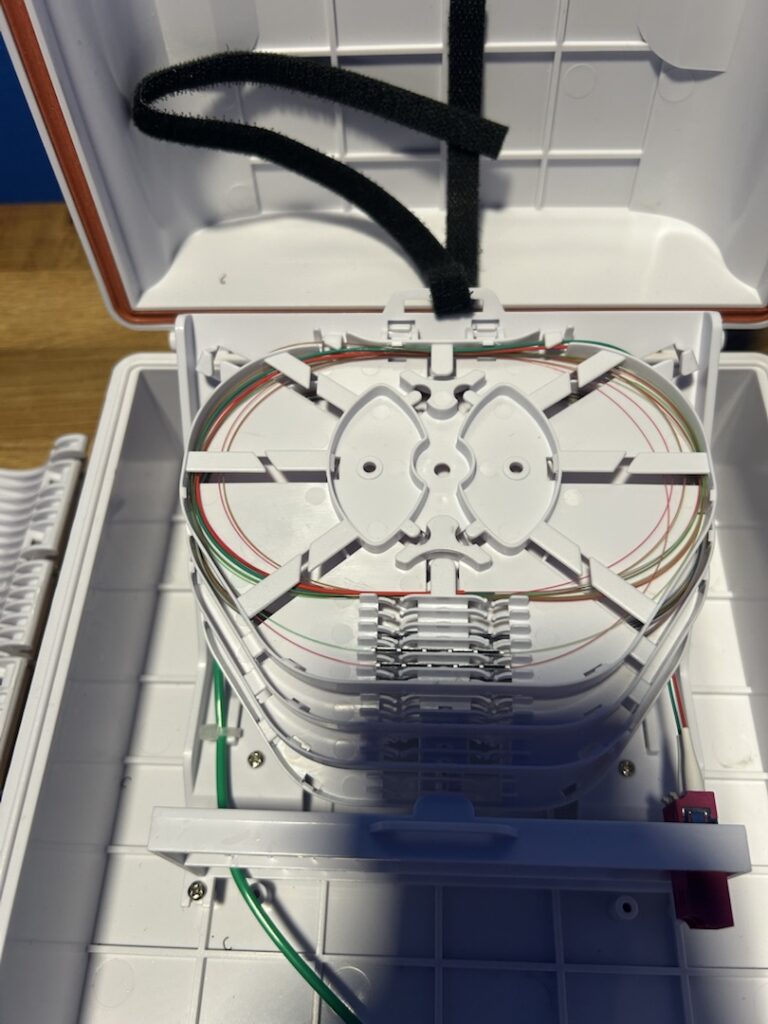
Wenn Glasfaserkabel verbunden werden müssen, kommen Spleißarbeiten zum Einsatz. Beim Schweißspleißen werden die Glasfasern thermisch miteinander verschmolzen – eine Technik, die minimale Dämpfungswerte und langfristig stabile Verbindungen gewährleistet. Jede Spleißverbindung wird anschließend gemessen und dokumentiert, um die Qualität der Strecke nachzuweisen.
Messungen und Qualitätssicherung
Nach Abschluss der Arbeiten wird die gesamte Strecke mit einem OTDR (Optical Time Domain Reflectometer) gemessen. Damit lassen sich Dämpfungswerte, Reflexionen und eventuelle Fehler in der Strecke präzise lokalisieren und dokumentieren. Erst wenn die Messwerte den Anforderungen entsprechen, gilt die Strecke als abgenommen.
Anforderungen der Telekom: Normgerechte Ausführung als Grundlage
Arbeiten an Telekom-Infrastruktur unterliegen klaren technischen Vorgaben. Verlegequalität, Spleißwerte, Dokumentation und Übergabeformate müssen den Anforderungen des Netzbetreibers entsprechen. Das setzt voraus, dass ausführende Unternehmen mit den geltenden Normen und Prozessen vertraut sind und strukturiert arbeiten – von der Planung über die Ausführung bis zur Übergabe der Messprotokolle.
Umsetzung durch die GRAEF Gruppe: Erfahrung in der Glasfaserinstallation
Die GRAEF Gruppe bringt Erfahrung in der Verlegung und dem Anschluss von Lichtwellenleitern mit – von der Kabelführung im Gebäude über Spleißarbeiten bis zur messtechnischen Abnahme. Dabei steht eine saubere, nachvollziehbare Ausführung im Vordergrund: Jede Verbindung wird korrekt ausgeführt, jede Strecke gemessen und dokumentiert.
Für Auftraggeber wie die Telekom bedeutet das: verlässliche Ausführung nach Vorgabe, strukturierte Übergabe und eine Glasfaserstrecke, die dauerhaft stabil arbeitet – ohne Nachbesserungsbedarf.
Glasfaser als Infrastruktur: Warum Qualität bei der Verlegung entscheidet
FTTH ist eine Infrastruktur, die auf Jahrzehnte ausgelegt ist. Fehler bei der Verlegung oder bei Spleißverbindungen können sich langfristig in instabilen Verbindungen, erhöhter Dämpfung oder aufwendigen Fehlersuchen niederschlagen. Eine sorgfältige Ausführung von Anfang an ist daher keine Frage des Aufwands, sondern eine Investition in die Langlebigkeit der Infrastruktur. Genau das ist der Anspruch, mit dem die GRAEF Gruppe solche Projekte umsetzt – präzise, dokumentiert und mit dem Ziel, eine Strecke zu übergeben, die langfristig zuverlässig funktioniert.
Woher weiß ich, ob ich FTTH oder FTTB habe?
Das lässt sich meist an der Hardware erkennen: Wenn in Ihrer Wohnung eine Glasfaserdose (Gf-TA) installiert ist und ein Glasfasermodem (ONT) direkt mit dem Router verbunden ist, handelt es sich um FTTH. Bei FTTB endet die Glasfaser im Keller in einem großen Kasten (DSLAM/MSAN), und in der Wohnung nutzen Sie weiterhin eine herkömmliche Telefondose (TAE). Auch ein Blick in den Vertrag oder ein Verfügbarkeitscheck beim Anbieter gibt Aufschluss.
Was ist FTTH bei der Telekom?
FTTH steht für „Fiber to the Home“. Bei diesem Anschluss der Telekom wird das Glasfaserkabel nicht nur bis zum grauen Kasten am Straßenrand oder in den Keller verlegt, sondern direkt bis in die Wohnung oder das Einfamilienhaus. Dies ermöglicht extrem stabile und hohe Bandbreiten von bis zu 1.000 Mbit/s (1 Gbit/s) und mehr, da keine leistungshemmenden Kupferkabel auf der „letzten Meile“ verwendet werden.
Was ist besser, FTTH oder FTTB?
FTTH ist die technisch bessere und zukunftssichere Lösung. Während bei FTTB („Fiber to the Building“) das Glasfaserkabel im Keller endet und die Daten innerhalb des Hauses über vorhandene Kupferleitungen (VDSL/G.fast) verteilt werden, entfällt dieser Flaschenhals bei FTTH komplett. FTTH bietet durchgehend Lichtwellenleiter bis zum Router, was höhere Geschwindigkeiten, geringere Latenzzeiten und eine geringere Störanfälligkeit garantiert.