

Strengthening cyber security in banks: strategies against digital threats
Cyber security strategies for banks: how financial institutions can effectively protect their systems against digital threats and cyber attacks.
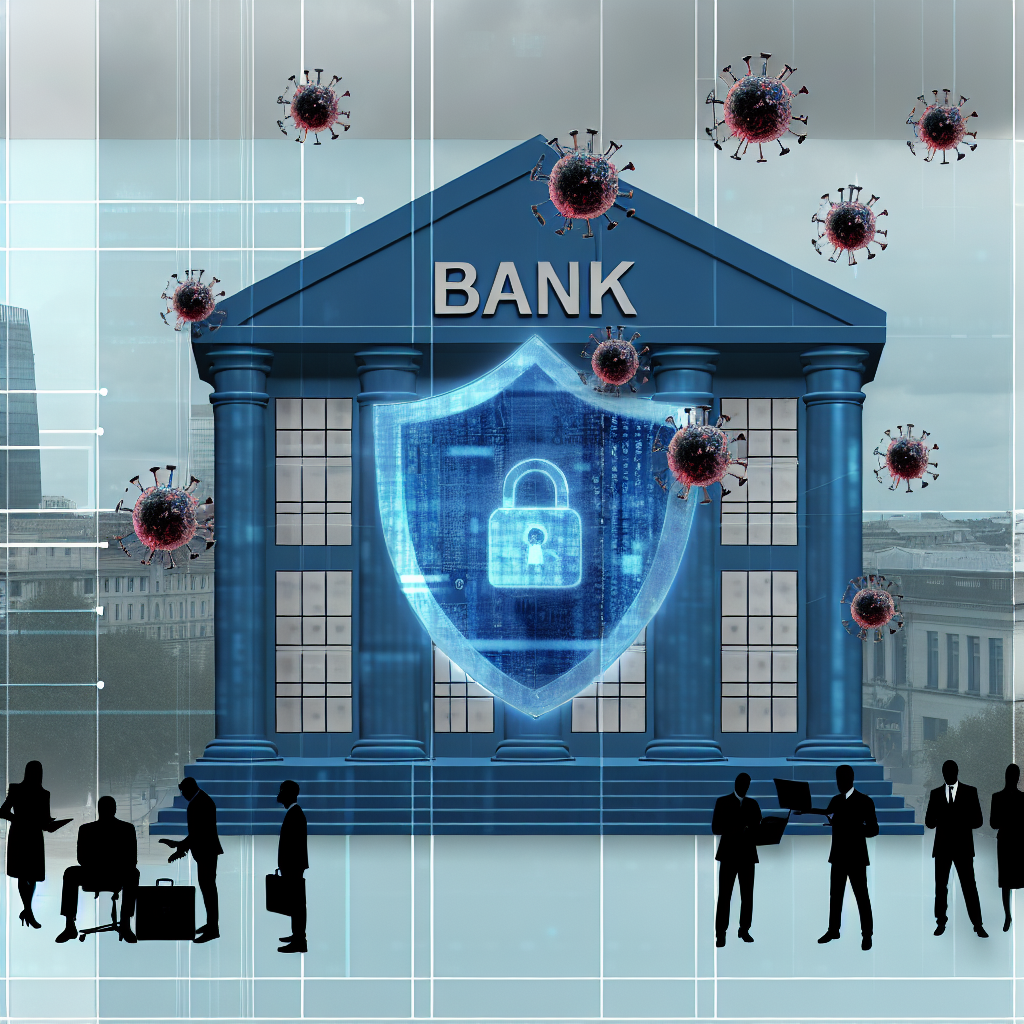
Recognizing and understanding digital threats
The ongoing digitalization of the banking sector not only brings efficiency and convenience, but also considerable risks. Cyber criminals are increasingly using sophisticated methods to exploit vulnerabilities in IT systems. According to a study by the German Federal Office for Information Security (BSI), over 1,000 attacks on German financial institutions were registered in 2023 alone - and the trend is rising.
Note on AI-generated content: The content of this blog is created with the help of advanced artificial intelligence. Although we strive to always provide you with accurate and useful information, questions or ambiguities may remain. In such cases, our experts will be happy to help you. Please do not hesitate to contact us using the details below. Our specialists are true experts in their field and will be happy to help you!

Contact options:

 Feedback form: Fill out the form
Email: vertrieb@graef-gruppe.de
Phone: +493069202294
We look forward to your queries and to helping you with any concerns you may have!
Why cyber security is essential for every bank
Cyber security in the bank is not only a technical challenge, but also a strategic imperative. A successful attack can not only cause financial losses, but also cause lasting damage to customer trust. Smaller banks, which often do not have sufficient resources for comprehensive security measures, are particularly affected.
Common types of attacks on banks
- Phishing: Deceptive e-mails that trick employees into disclosing sensitive data.
- Ransomware: Malware that encrypts systems and demands a ransom.
- DDoS attacks: Overloading of servers through mass requests.
- Insider threats: Security breaches by own employees or service providers.
Strategies for strengthening cyber security in banks
To arm themselves against digital threats, banks rely on a combination of technical, organizational and personnel measures. Proven strategies include:
- Zero-trust architecture: Every access is checked, regardless of its origin.
- Security awareness training: training for employees to recognize threats.
- Regular penetration tests: simulation of attacks to identify vulnerabilities.
- Encryption of sensitive data: Protection against unauthorized access during data transmission and storage.
Successful defense through early warning systems
In 2022, Commerzbank implemented an AI-supported early warning system that detects suspicious activities in real time. Within a year, over 300 potential attacks were averted - proof of the effectiveness of modern technologies in the area of cyber security at the bank.
Cybersecurity Bank as a long-term investment in trust and stability
Strengthening cyber security in banks is not a one-off measure, but a continuous process. Only by regularly adapting to new threat scenarios and investing in modern technologies can banks secure the trust of their customers and meet regulatory requirements. In an increasingly networked world, cyber security is not only protection for banks, but also a competitive advantage.