
CXO-Event auf Sylt 2025 – Geopolitik, Cybersicherheit und Bildung im Fokus
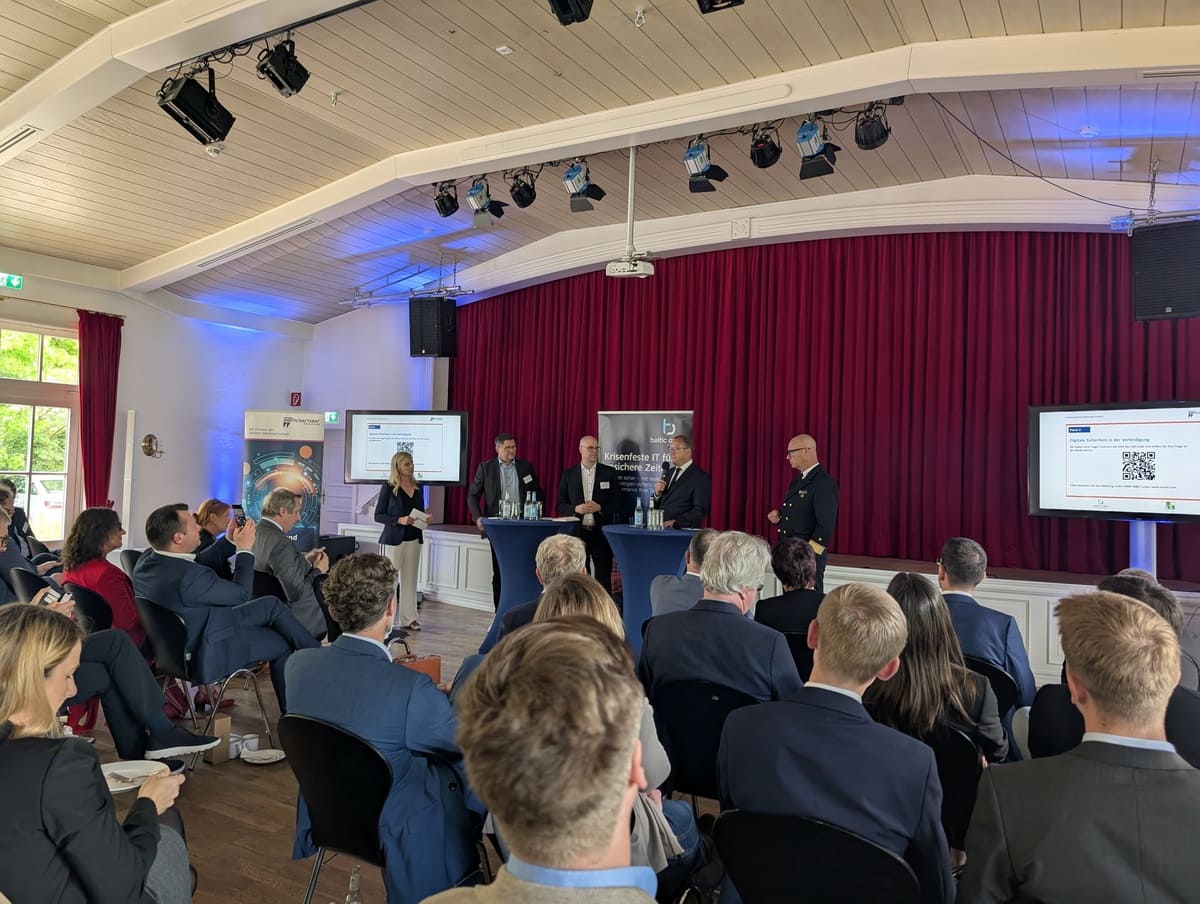
Am 9. Mai 2025 fand auf Sylt das 7. CXO-Event 2025 im Kulturhaus Sylt (Friesensaal in Keitum) statt. Veranstaltet vom Wirtschaftsrat der CDU (Landesverband Schleswig-Holstein) und seiner Landesfachkommission Digitales und Industrie 4.0, versammelte das Event hochkarätige Vertreter aus Politik, Militär, Wissenschaft und Wirtschaft. Peter Gräf, CEO der GRAEF Gruppe, war als Teilnehmer vor Ort und konnte wertvolle Eindrücke gewinnen. Auf der Agenda standen aktuelle Themen von geopolitischer Lage im Ostseeraum über digitale Sicherheit in Verteidigung und Wirtschaft bis hin zu Bildung im digitalen Zeitalter. Im Mittelpunkt aller Beiträge stand die Frage, wie neue Technologien und Kooperationen genutzt werden können, um Sicherheit in einer zunehmend vernetzten und unsicheren Welt zu gewährleisten.
Keynote: Ostseeraum – Geopolitik im Brennglas
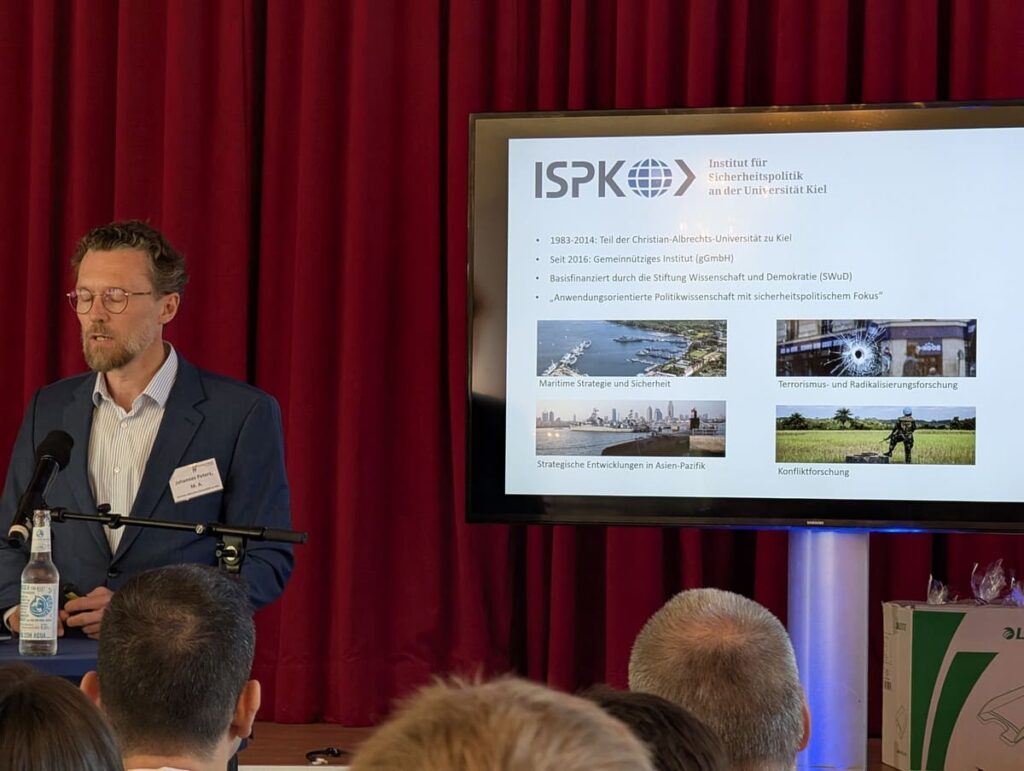
Johannes Peters (ISPK Kiel) während seiner Keynote über die geopolitische Lage im Ostseeraum.
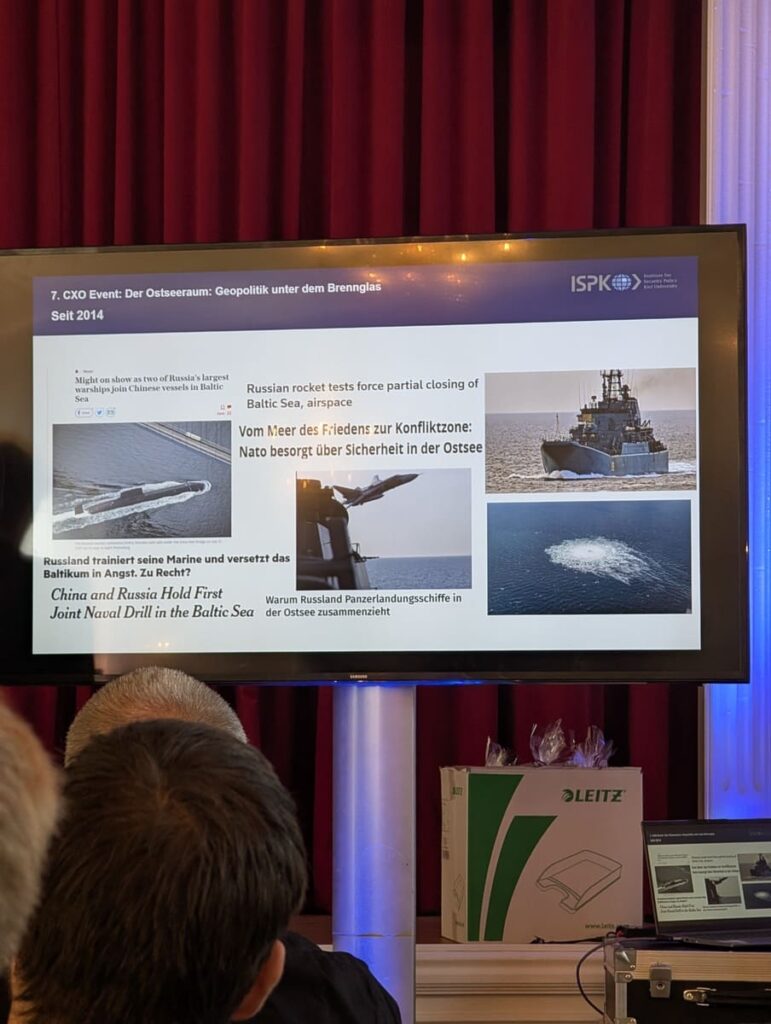
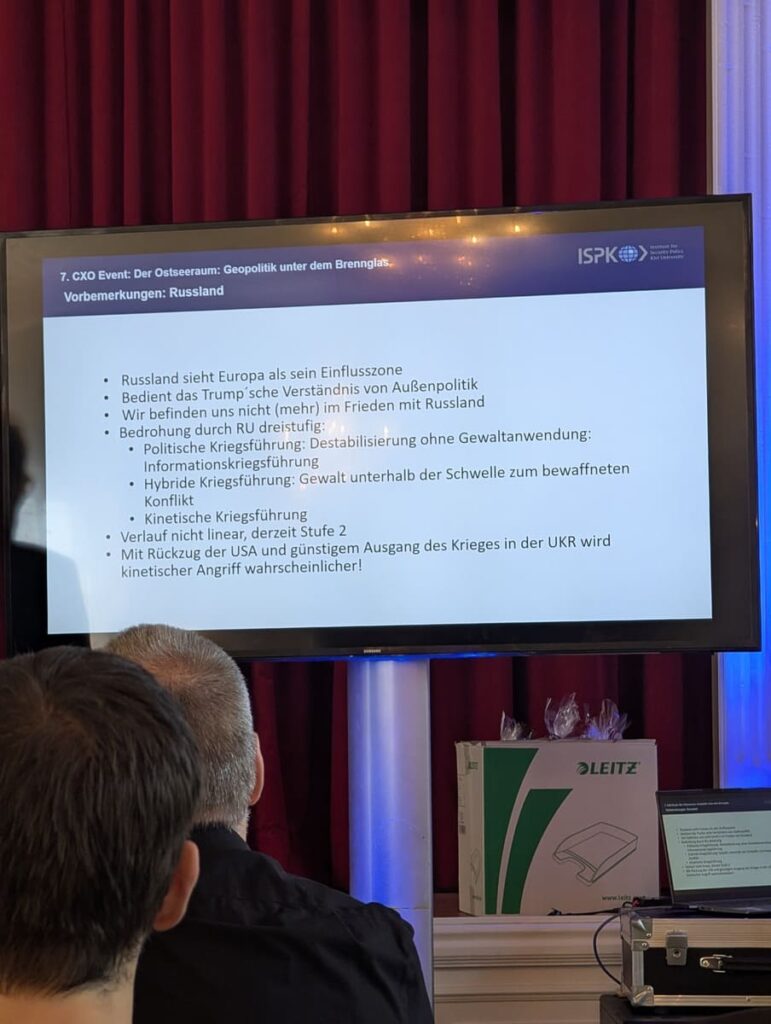
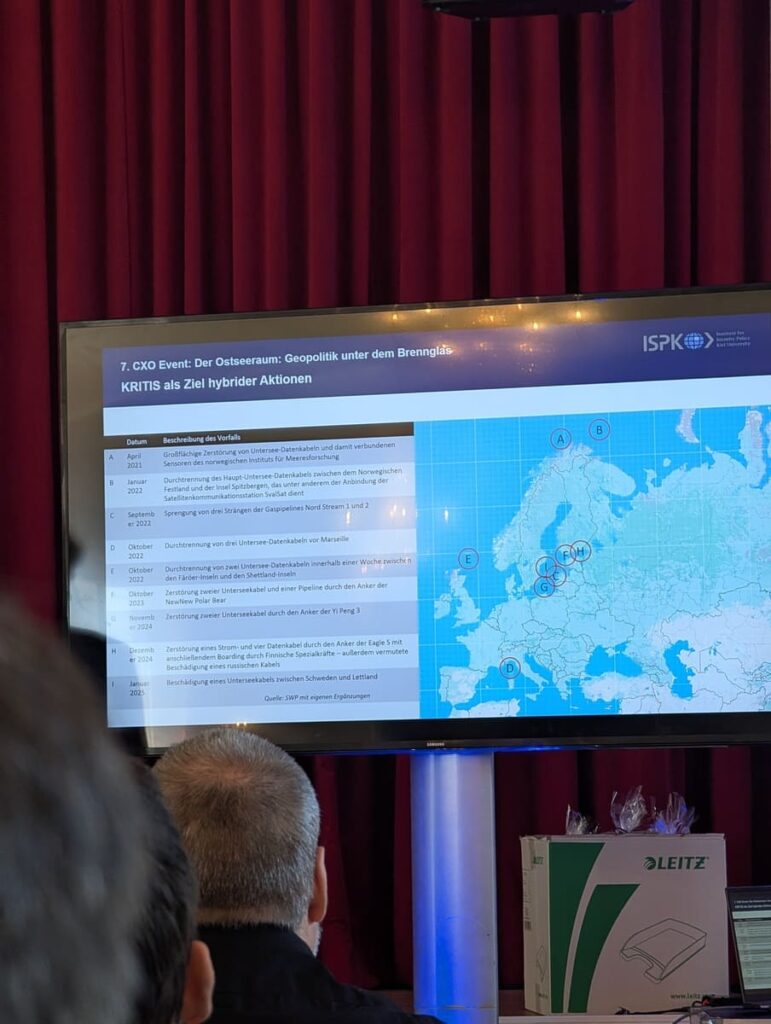
Zum Auftakt skizzierte Johannes Peters, M.A., Leiter der Abteilung Maritime Strategie & Sicherheit am Institut für Sicherheitspolitik der Universität Kiel (ISPK), in seiner Keynote “Der Ostseeraum – Geopolitik im Brennglas” die aktuelle sicherheitspolitische Lage in Nordeuropa. Er beleuchtete die wachsende strategische Bedeutung des Ostseeraums vor dem Hintergrund globaler Spannungen und des Ukraine-Krieges. Peters hob hervor, wie wichtig Eskalationsvermeidung in diesem sensiblen Gebiet ist – NATO und Russland bewegen sich hier auf engem Raum, sodass Missverständnisse schnell gefährlich werden können. Als konkretes Beispiel für neuartige Bedrohungen nannte er die Gefahr von Sabotage an Unterseekabeln, die für Kommunikation und Energieübertragung essentiell sind. Tatsächlich wurden in letzter Zeit vermehrt Tiefseekabel in der Ostsee beschädigt, wobei russische Akteure im Verdacht stehen. Eine Zerstörung solcher Kabel würde nicht nur militärische Kommunikation treffen, sondern auch Wirtschaft und Gesellschaft erheblich schaden. Peters’ Fazit: Zur Sicherheit im Ostseeraum braucht es entschlossenes internationales Handeln, robuste Infrastruktur und diplomatisches Fingerspitzengefühl, um Stabilität zu bewahren und Konflikte gar nicht erst eskalieren zu lassen.
Panel 1: Sicherheit der digitalen Infrastruktur
Im Panel 1 drehte sich alles um die Sicherheit digitaler Infrastruktur – also der kritischen Netze und IT-Systeme, die unsere Wirtschaft und Verwaltung am Laufen halten. An der Diskussion nahmen Expert:innen aus verschiedenen Bereichen teil, darunter Bodo Bahr (Generalsekretär der Ostseeparlamentarierkonferenz, BSPC), Dagobert Michelsen (Geschäftsführer der Baltic Online Computer GmbH), Stephan Frense (Geschäftsführer ARGE Netz) sowie Markus Lammerding (Geschäftsführer ITM Holding GmbH). Sie beleuchteten aus ihren Perspektiven die Verwundbarkeit moderner Infrastrukturen gegenüber Cyberangriffen und Sabotage.
Ein zentrales Thema waren die grenzüberschreitenden Datennetze und Energieversorgungssysteme im Ostseeraum. Bahr betonte die Bedeutung internationaler Kooperation: Im Ostseeraum arbeiten Anrainerstaaten bereits eng zusammen, um ihre Netze krisenfest zu machen. Die jüngsten Sabotagefälle – von Angriffen auf Gaspipelines bis hin zu mysteriösen Störungen von Internetkabeln – haben gezeigt, dass kritische Infrastruktur im Fadenkreuz fremder Mächte stehen kann. Dagobert Michelsen erläuterte, wie sich regionale Internetanbieter gegen Cyber-Attacken wappnen und warum Redundanz (zum Beispiel mehrere Datenwege) entscheidend ist, um Ausfälle zu verkraften. Stephan Frense ergänzte aus Sicht der Energiewirtschaft, dass die Strom- und Datennetze immer stärker digital verknüpft sind: Smart Grids und Industrie-4.0-Anwendungen erhöhen zwar die Effizienz, eröffnen aber zugleich neue Angriffsflächen. Daher müsse Sicherheit schon beim Design dieser Systeme mitgedacht werden (Stichwort Security by Design). Konsens der Panelisten war, dass öffentliche Hand und Privatwirtschaft enger kooperieren müssen – etwa durch gemeinsame Notfallübungen, Informationsaustausch zu Bedrohungen und Entwicklung von Standards –, um die digitale Infrastruktur robust und resilient zu gestalten.
Panel 2: Digitale Sicherheit in der Verteidigung
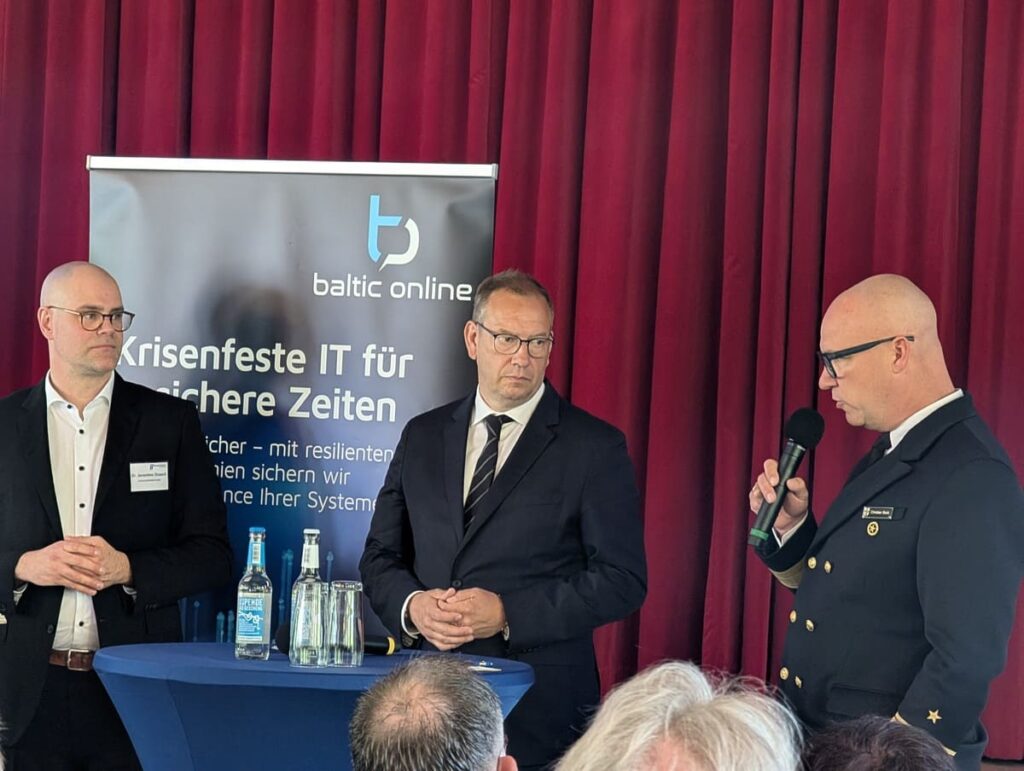
Diskussion zu digitaler Sicherheit in der Verteidigung: Henning Otte (mitte) und Flottillenadmiral Christian Bock (rechts) mit Industrievertretern im Gespräch.
Das Panel 2 widmete sich der Frage, wie die digitale Sicherheit in der Verteidigung gewährleistet und modernisiert werden kann. Hier diskutierten hochrangige Vertreter aus Politik, Militär und Rüstungsindustrie: Henning Otte, MdB (stellv. Vorsitzender des Verteidigungsausschusses im Deutschen Bundestag), Flottillenadmiral Christian Heinrich Bock (Unterabteilungsleiter Militärstrategie, Einsatz und Operationen im Verteidigungsministerium), Dr. Jeronimo Dzaack (Leiter Strategie, Technologie und Innovation bei ATLAS ELEKTRONIK GmbH) und Eugen Ciemnyjewski (Geschäftsführer EUROATLAS GmbH).
Ein Schwerpunkt dieses Panels war das Zusammenspiel von großen und kleinen Verteidigungssystemen und die Frage, ob neue Entwicklungsansätze nötig sind. Henning Otte machte deutlich, dass die Bundeswehr nach Jahren des Sparkurses nun massiv investiert – nicht nur in milliardenschwere Großprojekte wie Flugzeuge und Schiffe, sondern auch in agile, kleinere Systeme. Letztere umfassen z.B. unbemannte Drohnen, Satellitenkommunikation oder Cyber-Abwehrsoftware, die rasch beschafft und aktualisiert werden können. Otte betonte, dass Deutschland Lehren aus dem Ukraine-Krieg zieht: Moderne Kriegsführung entscheidet sich nicht allein mit Panzern und Jets, sondern auch in der digitalen Sphäre. Admiral Christian Bock bestätigte aus strategischer Sicht, dass künftige Konflikte hybride Bedrohungen mit sich bringen – Cyberangriffe auf militärische IT-Systeme, Desinformation sowie Angriffe auf zivile Infrastruktur als Teil der Kriegsführung. Die Cybersicherheit der Streitkräfte habe daher oberste Priorität. Bock erläuterte, wie die Bundeswehr ihre Netzwerke und Waffensysteme gegen Hackerangriffe schützt und zugleich versucht, innovative Technologien schneller in die Truppe zu bringen. Hier knüpfte Dr. Jeronimo Dzaack von ATLAS ELEKTRONIK an: Er stellte neue Entwicklungsansätze vor, mit denen die Rüstungsindustrie flexibler und schneller auf technologische Trends reagieren kann. Traditionell dauern Rüstungsentwicklungen viele Jahre – Dzaack plädierte dafür, agile Methoden aus der zivilen Tech-Welt zu übernehmen, um z.B. Software für U-Boote oder Sensorsysteme in kürzeren Zyklen upzugraden. Eugen Ciemnyjewski ergänzte, dass auch spezialisierte Mittelständler (wie sein Unternehmen EUROATLAS, ein Anbieter von Leistungselektronik) wichtige Innovationsgeber sind. Durch Kooperationen zwischen Großkonzernen, Mittelstand und Start-ups könnten neue Lösungen entstehen, die sowohl großen Plattformen (etwa einer Fregatte) als auch einzelnen Soldaten im Einsatz zugutekommen. Das Panel war sich einig, dass Digitalisierung und Verteidigung untrennbar verbunden sind: Die Landkarte der Bedrohungen reicht vom Cyberraum bis zum Meeresgrund – entsprechend muss die Rüstungsstrategie sowohl klassische Fähigkeiten stärken als auch High-Tech-Innovationen und digitale Abwehr bereithalten. Neue entwicklungsansätze wie Public-Private-Partnerships und Dual-Use-Technologien (zivile Innovation für militärische Zwecke) wurden als vielversprechend bewertet, um schneller auf das dynamische Sicherheitsumfeld reagieren zu können.
Panel 3: Digitale Sicherheit in der Wirtschaft
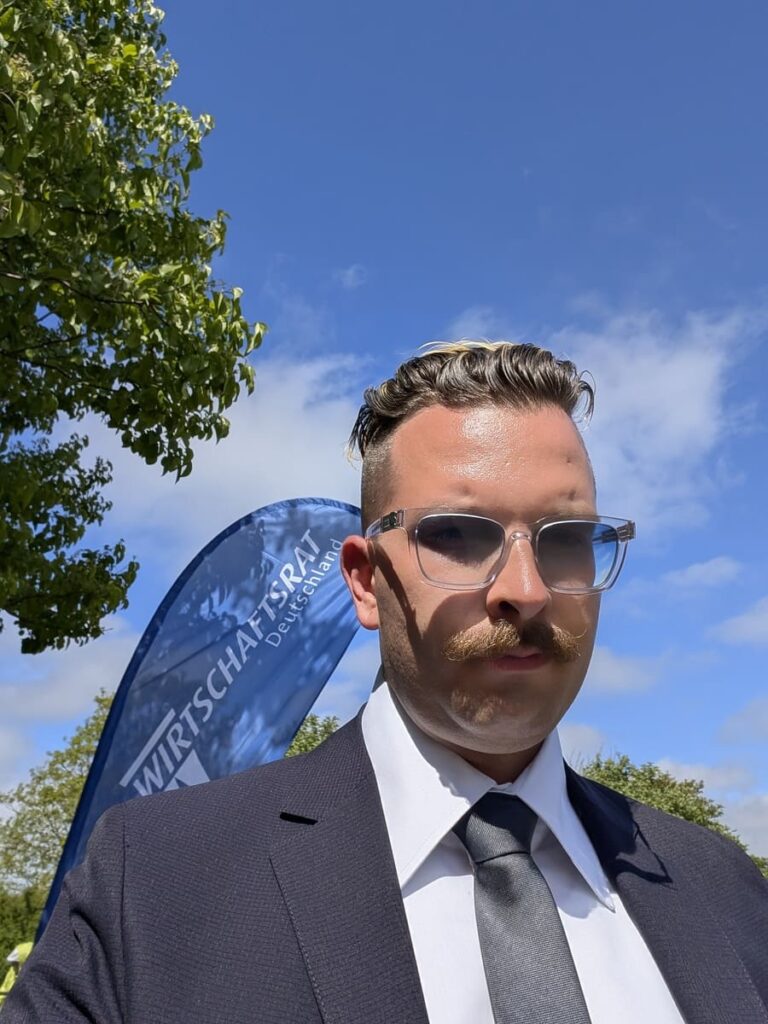
Panel 3 zur digitalen Sicherheit in der Wirtschaft mit Teilnehmern aus Politik, Behörde und Beratung (u.a. Prof. Timo Kob, HiSolutions, 2.v.r. am Stehtisch).
Nach der Verteidigung rückte im Panel 3 die digitale Sicherheit in der Wirtschaft und Gesellschaft in den Fokus. Auf dem Podium sprachen Hansjörg Schmidt, MdHB (Sprecher für Wirtschaft und Innovation der SPD-Fraktion in der Hamburgischen Bürgerschaft), Manuel Bach (Leiter des Referats Cybersicherheit für KMU beim BSI), Carsten Schiewe (Partner Defence & Space bei KPMG) und Prof. Timo Kob (Vorstand der HiSolutions AG und Vorsitzender der Bundesarbeitsgruppe Cybersicherheit im Wirtschaftsrat). Moderiert von Anja Zerbin, diskutierte die Runde, wie Unternehmen – vom Großkonzern bis zum Familienbetrieb – sich gegen die wachsende Flut von Cyberbedrohungen wappnen können.
Hansjörg Schmidt eröffnete mit der politischen Perspektive: Die Digitalisierung der Wirtschaft biete enorme Chancen, doch nur wenn Sicherheit mitgedacht werde, könne daraus nachhaltiger Wohlstand entstehen. Er verwies auf Initiativen in Hamburg und bundesweit, die Unternehmen bei der IT-Sicherheit unterstützen und zugleich Innovationen fördern. Manuel Bach schilderte eindrücklich die Lage aus Sicht des Bundesamts für Sicherheit in der Informationstechnik (BSI). Die Bedrohungslage im Cyberraum sei alarmierend, Angriffe auf Unternehmen nehmen ständig zu und treffen zunehmend auch kleine und mittlere Unternehmen (KMU). Bach stellte den vom BSI entwickelten Cyber-Risiko-Check vor, ein neues Angebot, das KMU eine standardisierte Sicherheitsberatung ermöglicht. Viele Mittelständler wollten mehr für ihre IT-Sicherheit tun, wüssten aber oft nicht wo sie anfangen sollen – hier setzt der Cyber-Risiko-Check an, um Schwachstellen aufzudecken und passgenaue Maßnahmen zu empfehlen. Carsten Schiewe brachte die Beratungssicht ein und betonte, dass Cybersecurity längst ein Chefthema ist: In Aufsichtsräten und Geschäftsführungen müsse digitales Risikomanagement genauso ernst genommen werden wie Finanzen. Er berichtete von seiner Tätigkeit bei KPMG, dass immer mehr Firmen sogenannte Cyber-Stresstests durchführen und in Notfallpläne investieren, um im Ernstfall handlungsfähig zu sein. Allerdings gebe es im Mittelstand noch Nachholbedarf, sowohl bei technischen Schutzmaßnahmen als auch in der organisatorischen Verankerung von IT-Sicherheit (z.B. durch regelmäßige Schulungen der Mitarbeitenden, Incident-Response-Teams, etc.).
Zum Abschluss des Panels setzte Prof. Timo Kob einen etwas anderen Akzent: Er hob die Bedeutung von Bildung und Kompetenzen für die digitale Sicherheit hervor. Technik alleine reiche nicht aus – die Menschen, die sie nutzen, müssten ebenfalls befähigt werden, sicher damit umzugehen. IT-Bildung und Medienkompetenz sollten nach Kobs Überzeugung als Grundrecht und elementarer Bestandteil der Allgemeinbildung verankert werden. Jeder Bürger und jede Arbeitnehmerin brauche grundlegendes Verständnis für digitale Technologien, um sich im digitalen Raum souverän und sicher bewegen zu können. Diese Forderung stieß auf breite Zustimmung im Panel: Eine Bevölkerung mit hoher Medienkompetenz ist weniger anfällig für Phishing-Angriffe, Desinformation und andere digitale Gefahren. Zudem bildet sie den Nährboden für die Fachkräfte von morgen in IT und Security. Kob verwies darauf, dass Länder wie Estland digitale Bildung früh fördern – ein Beispiel, von dem Deutschland lernen könne. Insgesamt zeigte Panel 3, dass Cybersicherheit in der Wirtschaft als gemeinschaftliche Aufgabe verstanden werden muss: Staatliche Stellen wie das BSI, die Politik, Beratungsunternehmen und die Unternehmen selbst müssen an einem Strang ziehen. Neben Technik und Prozessen ist die Faktor Mensch entscheidend – informierte, wachsame und gut ausgebildete Nutzer sind die beste Verteidigung gegen Cyberbedrohungen.
Synergien zwischen zivilen Technologien und Sicherheitsanwendungen
Abschließend lässt sich festhalten, dass das 7. CXO-Event auf Sylt 2025 einen umfassenden Überblick über die aktuellen Herausforderungen und Lösungsansätze im Spannungsfeld von Geopolitik, digitaler Sicherheit und Bildung bot. Peter Gräf von der GRAEF Gruppe zog aus der Veranstaltung das Fazit, dass vernetztes Denken über Branchengrenzen hinweg heute wichtiger denn je ist. Ein roter Faden durch Keynote und Panels war die Erkenntnis, dass Sicherheit eine ganzheitliche Herangehensweise erfordert – von der internationalen Zusammenarbeit zur Sicherung von Seewegen und Datenkabeln, über die Verzahnung von Verteidigungssektor und Tech-Industrie bis hin zur Verankerung von Digitalkompetenz in der Gesellschaft.
Für die GRAEF Gruppe als Spezialist für Sicherheitstechnik und industrielle Lösungen zeigt sich eine klare Schnittstelle: Die fortschreitende Konvergenz von ziviler und militärischer Technologie. Viele der auf dem Event diskutierten Ansätze beruhten darauf, ziviles Know-how für sicherheitsrelevante Anwendungen nutzbar zu machen. So können etwa Ingenieursleistungen aus dem Maschinenbau, Automatisierung und Industrie 4.0 helfen, robustere und effizientere Systeme für die Kritische Infrastruktur zu bauen. Moderne Sensorik, KI-gestützte Analytik oder IoT-Plattformen, die in der Industrie erprobt sind, lassen sich mit Anpassungen auch zum Schutz vor Bedrohungen in Verteidigung und Innerer Sicherheit einsetzen. Umgekehrt profitieren auch zivile Projekte vom militärischen Sektor – man denke an Technologien wie GPS oder das Internet, die ursprünglich aus Verteidigungsprogrammen hervorgingen und heute im Alltag unverzichtbar sind.
Das CXO-Event unterstrich, dass Innovation durch Austausch entsteht: Wenn Vertreter unterschiedlichster Bereiche an einem Tisch kommen, entstehen neue Ideen für gemeinsame Lösungen. Genauso fördert die GRAEF Gruppe den Dialog zwischen Industrie und Sicherheitsbehörden, um Synergien zu heben. Die Vision „Technologie für Sicherheit“ bedeutet, die besten Ansätze aus allen Disziplinen zusammenzuführen. Insgesamt war das 7. CXO-Event auf Sylt ein erfolgreicher Treffpunkt, der Impulse für zukünftige Kooperationen gab. Die GRAEF Gruppe wird diese Impulse nutzen, um weiterhin Security for generations zu schaffen – durch den Brückenschlag zwischen zivilem Engineering und sicherheitsrelevanter Innovation.
Welche geopolitischen Herausforderungen wurden thematisiert?
Johannes Peters (ISPK Kiel) sprach über die strategische Bedeutung des Ostseeraums, Sabotage an Unterseekabeln sowie die Notwendigkeit robuster Infrastruktur und diplomatischer Stabilität.
Wie wurde die Sicherheit digitaler Infrastrukturen diskutiert?
Im ersten Panel diskutierten Experten über Cybersicherheit, Redundanz kritischer Netze und Security by Design bei Smart Grids und Datenleitungen im Ostseeraum.
Welche Schlüsselbotschaft zog die GRAEF Gruppe aus dem Event?
Peter Gräf betonte, dass zivile und militärische Technologien zusammengeführt werden müssen. Innovation entstehe durch Disziplin-übergreifenden Austausch, um vernetzte Sicherheitslösungen zu entwickeln.