

 Deutsch

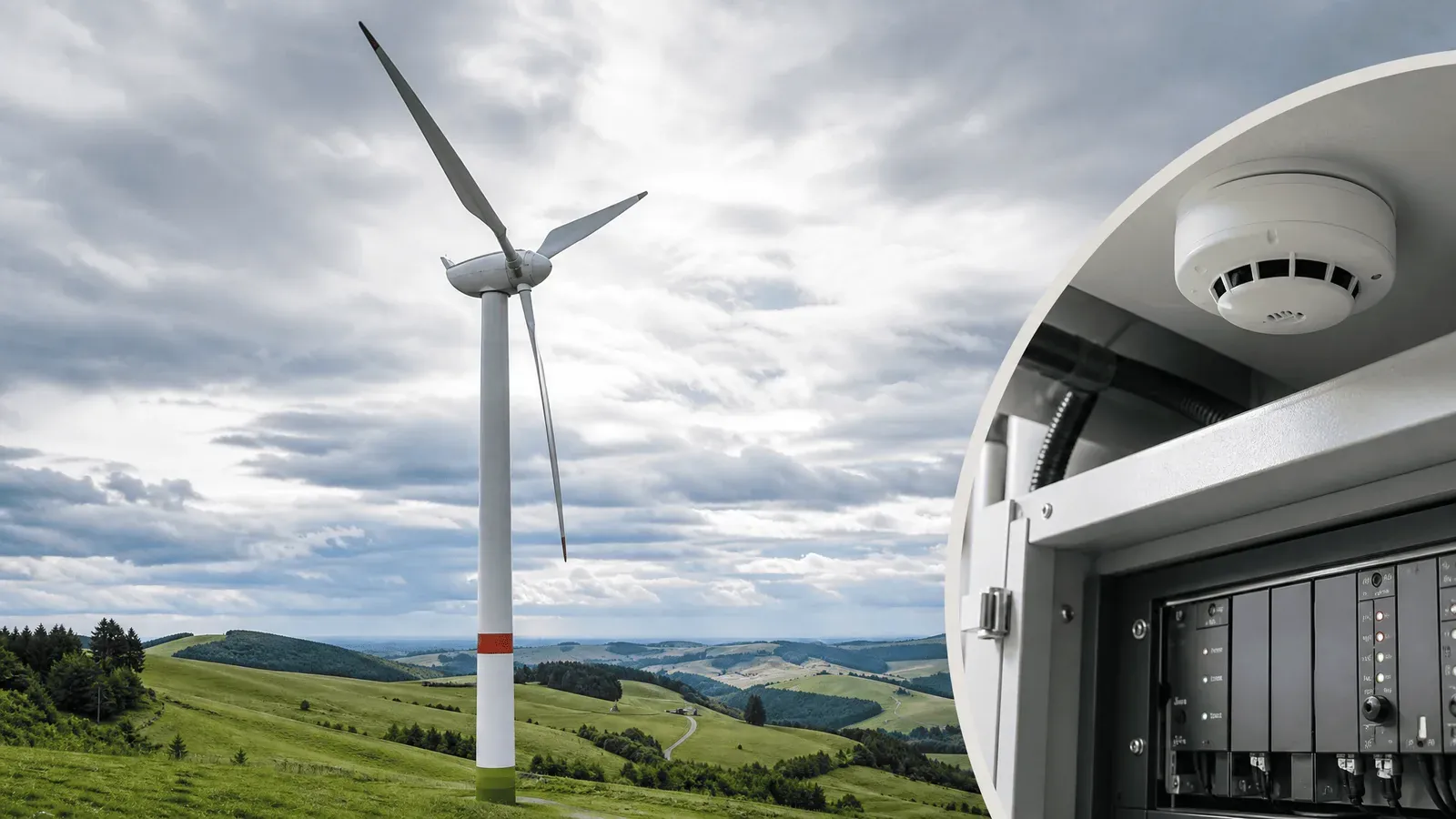
One Fire alarm system for wind turbines It is an important component for the protection of people, assets and energy generation. In a wind energy installation, powerful electrical components, tightly confined installation spaces, high altitudes and sometimes inaccessible locations come together. If a fire occurs there, the situation can quickly escalate. A professionally planned fire alarm system detects risks early on, alerts responsible parties and creates the basis for coordinated measures. The GRAEF Group supports operators and project managers nationwide with modern Fire protection technology for demanding applications.
Why wind turbines pose special requirements for fire protection
Wind turbines are much more than visible rotor blades and a tower. Numerous technical components work together in the machine room, at the tower base and along the energy and control paths. These include, among other things, inverters, transformers, switch cabinets, generators, cable systems, hydraulic systems, as well as braking and control technology. Heat generation, electrical faults, insulation damage or defects in mechanical components can constitute a potential cause of fire.
A particular challenge lies in the height and limited accessibility. The machine house is located at a high altitude depending on the installation, while the internal areas can be accessed via narrow access routes and ladders. Furthermore, in remote wind farms, the travel routes of personnel are extended. Therefore, early and reliable detection of an incipient fire is crucial.
A fire alarm system can help to detect critical changes in monitored areas in a timely manner. The notification is displayed locally depending on the security concept, transmitted to a control center, or linked to further technical processes. The solution must fit the specific system type, location, existing infrastructure, and operational requirements.
Typical risk areas in a wind energy installation
- Machine room with generator, transmission, hydraulics and control technology
- Switch cabinets, inverters and electrical distribution systems
- Cable trays and energy transmission routes in the tower
- Transformer areas and switching stations
- Tower foot, technical rooms and storage areas
Early detection instead of reaction to visible smoke from a fire
The early detection is the focus of the planning of a fire alarm system for wind turbines. The earlier an unusual smoke or heat development is detected, the sooner operators can react, secure operational processes, and inform emergency personnel. This is particularly important because a fire in high-altitude, technically well-equipped areas can potentially spread rapidly.
Depending on the risk area, different reporting principles can be useful. Point-shaped automatic detectors are suitable for many classic applications. However, in areas with special environmental conditions, airflow or difficult-to-access installation locations, an individually tailored detection solution may be required. Targeted monitoring of switch cabinets and cable routes can also be part of the overall concept.
It is crucial to minimize false alarms without compromising the response speed in the event of an actual fire. Dust, temperature fluctuations, vibrations, and maintenance work can all affect the operating conditions in a wind turbine. Therefore, the choice of detectors, the installation location, and maintenance must be coordinated appropriately.
Summary for planning
Effective fire detection in wind turbines takes into account not only the fire load but also the technical and climatic conditions on site. Standard solutions are not always sufficient – an object-specific risk analysis forms the basis for reliable design.
Note: The specific configuration of a fire alarm system depends on the individual fire protection concept, the technical data of the system, operator requirements, and the applicable rules and regulations at any given time. Therefore, a professional planning is essential.
Alarming and transmitting fire reports
Detecting a fire incident is only the first step. Equally important is that the information is quickly and clearly communicated to the responsible parties. In wind farms, facilities are often centrally monitored. A fire notification can therefore be integrated into existing remote monitoring or control systems, provided that the technical infrastructure and the security concept allow for this.
Depending on the planning, fire alarm messages can be transmitted to operators, security services or a rescue agency. Additionally, technical procedures can be defined that can assist in the event of an alarm. These include, for example, the controlled shutdown of certain system components, a targeted status notification, or the activation of additional alarm routes.
The specific cause of a report must be clearly identifiable to those responsible. Clean reporting group and area identification supports the quick assessment of the situation. Especially in larger wind farms with multiple installations, a structured presentation of the information is crucial so that no time is lost due to unclear assignments.
Professionally planning a fire alarm system for wind turbines
A fire alarm system for wind turbines should be considered from the very beginning as part of the overall technical planning. Interface points with control, power supply, communication, and maintenance must be taken into account already during the design phase. Existing systems also require a detailed inventory to reliably implement expansions or retrofits.
The GRAEF Group supports projects from consulting to technical planning, installation, commissioning and maintenance. We not only consider individual products, but also the interaction of all components: detection, alarm, transmission, documentation and long-term operability. In addition, other areas of the Security technology be integrated into an overarching protection plan.
Regular maintenance and functional checks are particularly important for the availability of a fire alarm system. They help to detect contamination, technical changes or malfunctions early on. In this way, the system remains a reliable component of fire protection throughout the entire lifecycle of the wind turbine.
Conclusion: Investment protection through early fire detection
Wind turbines make an important contribution to energy supply and at the same time impose high requirements on technical fire protection. A professionally planned fire alarm system helps to identify risks early on, structure alarm routes and limit the impact of a fire incident. With an individual concept, people, technology and the long-term availability of the system can be better protected.
Other interesting articles
Further topics related to safety and fire protection
- KIDDE Global Solutions – professional solutions for fire detection
- SmartCell – flexible wireless extensions for fire protection
- Security technology for industrial companies
- Current news from the GRAEF Group

Contributions from the practical experience of our installers, project managers and software developers. The group is led by founder Peter Gräf, a DGuSV-certified expert in security technology.
Our team


 German
 English